Wednesday, September 7, 2011

The work of human hands


Davide Panagia
   Trent University


There is little doubt that the circulation of appearances is an anxious fact about our contemporary condition. This is made even more acute by the proliferation of events and objects in and through which we interface with appearances, events and things like photography, film, cooking, video games, music, shuffling, paint, apps, reading, advertising, opinion polls, tweeting, posting, and so forth. The Canadian media philosopher Marshall McLuhan - who would have celebrated his one hundredth birthday this year - was influential in disseminating the idea that each medium is unique in the ways in which it handles appearances in the world, whether text, or image, sound, or touch; and through such handlings, extends our own ways of handling the world.
Today, the various media themselves seem to matter less and less because they are becoming ever more fluid: we handle cell phones as easily as we might a camera, or a tablet. However, one thing does seem to stand out as perhaps the most available form of mediatic interface – namely, the screen. Whether cell phones, computers, tablets, televisions, cameras, or what have you, we are living in an unprecedented age of screen exposure, as Kevin Kelly once remarked in the pages of the New York Times Magazine: “Everywhere we look,” he said in 2008, “we see screens.” (“Becoming Screen Literate”, November 23, 2008). This may have made sense 3 years ago, but today we should re-write Kelly’s sentence to say that “everywhere we touch, we touch screens.” Rather than simply sophisticated viewers, we are becoming sophisticated handlers, ‘absorbed by the immediacy of the screen’, as the American popular culture writer, Robert Warshow, affirmed in 1954. [For more on Warshow, I highly recommend the very accessible and extremely well written collection of his essays published under the title The Immediate Experience: Movies, Comics, Theatre and Other Aspects of Popular Culture. Cambridge, MA: Harvard University Press, 2002].

“BurkaNike” by Pode Bal
The irony in all this is that despite our well-documented mediatic iconophillia, we have allowed ourselves to accept the idea that anything that appeals to our senses is bad for us, that we are all unconscionable fools because we become absorbed by things that appear before us, that appearances can only tell us lies and condemn us to a life of sin. In this, we persuaded ourselves of a moral theory of the image that says that the only true things in the world are the things we can know, and everything else is ‘mere appearance’, so that all instances of the allure of appearances operate within the same moral and perceptual registers as advertising, or pornography, or both.
If this looks and sounds too polemical - but nonetheless familiar - it is because such reactions have perpetually accompanied cultures of image-proliferation, from the ancient Greeks and Jews, to the early Christians, to the Byzantine iconoclasts, to the Protestant Reformation, to Walter Lippmann, to The Matrix movie, and Wikileaks. All these instances of iconophobia are reactions imbued and embedded with aspects of the First Commandment (the one against idolatry), and they appear and reappear to warn of the damage that appearances can do - to the mind, to the soul, to the eyes, and to the body. Here is what one Biblical prophet has to say about it, in Psalm 135:
15 The idols of the nations are silver and gold,

the work of human hands.

16 They have mouths, but do not speak;

they have eyes, but do not see;

17 they have ears, but do not hear,

nor is there any breath in their mouths.

18 Those who make them become like them,

so do all who trust in them!
The message is clear: “if you don’t stop it, you’ll go blind!”, so to speak. And this lesson rings as true today as it did during its penning. Idols are artifices who appear real but are not - they seem to have all the external qualities and sensory capacities of humans, but none of those things work; appearances are the living dead, vampires, or alien apparitions. And what is worse, the risk of our interface with them is contagion or prodding – if we interface with them, we will become like them. The message of the first commandment, and of these few lines from Psalm 135, is the message of all critique that treats the luminosities of appearances as an instance of deception (this is what it means to be duped by an appearance and thus to be affected by its collusive forces).
I want to suggest another approach to what I call the advenience of the appearance (i.e., its ingression to experience) that takes as a political fact of our contemporary condition that our handling of appearances informs our handling of one another, and that this matters to our senses of politics. It matters to our senses of politics because our handling of appearances multiplies and pluralizes our pictures of political resistance. To treat appearances that advene - on a computer screen, or on the television monitor, or on our cell phones, tablets, etc. - exclusively as claim making entities available to our cognitive understandings takes the fizzle out of those intervals of friction that pose resistances to our ways of interacting with the world.
London’s Burning: Tottenham. August, 2011
A case in point is the recent riots in London and the looting/burning of the Croydon and Tottenham suburbs. Even a tertiary scan of the comments and reactions to this event suggest that they are entirely ensconced within the moral theory of the image I outline above. ‘What we are seeing’ - so we are told – ‘are a bunch of unproductive hoods who have nothing to do other than destroy private property and steal what they otherwise cannot afford to own because they don’t have jobs.’ They are the unthinking, whose time wasted has numbed their minds. They have eyes, but do not see; ears, but do not hear: they have become the consumer products they desire and trust. From the perspective of a moral theory of the image, the scandal of the London riots is exactly the scandal prophesied by the Reverend Thomas Malthus in 1798 in his classic study on the (then) new political economy, “An Essay on Population.” In those pages he outlined exactly how the putting in place of the Poor Laws would - in no uncertain terms - increase sloth amongst the lower classes and create the kinds of attitudes and customs (i.e., lewdness, irresponsible procreation and childrearing, etc.) that we have been told were responsible for the London riots.
Now, several things seem to me worth mentioning in response to the moral theory of the image that governs our general perceptual attitudes: the first is to reiterate a point raised by David Harvey worth making over and over again [see his “Feral Capitalism Hits the Streets”]: looting is a “feral” attitude that neoliberal capitalism created and has been more than happy to defend as a standard modus operandi - just consider, in the US context, whether the sub-prime mortgage disaster isn’t a form of feral looting?
The next point worth mentioning is a point made by the cultural and political philosopher, Jacques Rancière: what I’m calling the moral theory of the image is an instance of a certain mode of thinking that does not want you to stop, look, and see. “There is nothing to see here!” (Ten Theses on Politics, Theory & Event 5.3) is the message we learn from the knee-jerk condemnation of the rioters; that is, there is nothing worth paying attention to because we already know what is wrong with this picture. “There is nothing to see here!” also means that there is nothing political about what has happened. This is a lesson that was parlayed over and over again by the media. ‘The looters have no political agenda’; they’re just looting for the sake of looting. But as Laurie Penny notes, “The truth is that very few people know why this is happening. They don't know, because they were not watching these communities. Nobody has been watching Tottenham since the television cameras drifted away after the Broadwater Farm riots of 1985.” [Panic on the streets of London]. There is nothing to see here, so don’t bother looking.
In all of these quick and easy condemnations, little mention has been made of the fact that levelling and looting is a customary practice in British popular politics, at least since the time of the Levellers during the English Civil Wars. Levellers were defenders of liberty in the most literal sense of the term, who would act politically by rioting and destroying property. The attribution of their name comes from a practice they espoused of levelling hedges during riots that divided property lots. The Levellers did not have a set political agenda; they were god-fearing folk who were broadly committed to abolishing government corruption. You can find a selection of their writings here, if you want to learn more. My point, simply, is that levelling and rioting have been, since the discovery of modern liberal toleration and natural rights, a standard political practice autochthonous to British popular rule.
So, in fact, there is something political to see here: namely, that leveling or looting is a mode of resistance that – however unattractive it might be – stands as a form of political action. That Prime Minister David Cameron has elected to call for the eviction of looters and rioters from their homes as a form of punishment for their actions might also suggest that not only does looting and rioting stand as a mode of political action, but that it has juridical consequences (see here; and for a response to Cameron’s appeal, see the ‘Not in my name’ petition here).
This brings me to my final point: to disregard the [recent] London riots as unpolitical and not worthy of our attention is to miss an opportunity not only to address a serious socio-economic problem, but also a potential occasion to re-imagine our pictures of political resistance. This is not to say that we should all turn to Levelling; it is to say that the advenience of an appearance - like the images of looting, or levelling, or rioting - marks an interval in our habits of sensing; to regard an advenience is thus to allow the possibility of an effrontery, or a friction, that bothers us to the core. We are right to be bothered by the London Riots, and it is worth our political while to attend to this irritation.
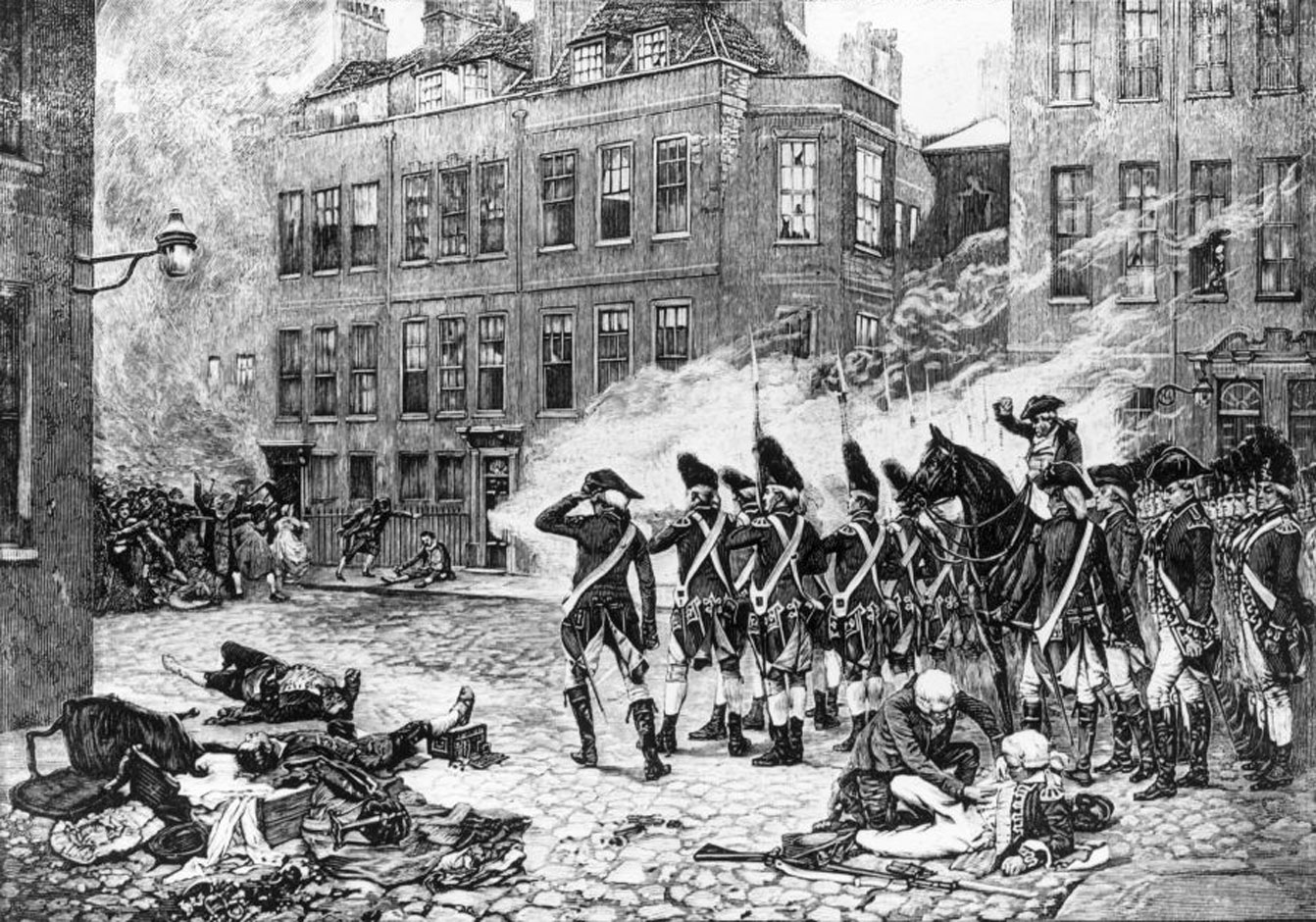
I will conclude with this provocation: Recent events like the London Riots suggest that the political dilemma posed by neoliberal capitalism is not the adjudication of the priority of the right over the good, or the determination of the good as a right; the political challenge is, rather, the interruption of circulation. And to disregard the multiple portfolios of resistance available through our experiences of advenience, because such experiences persist and subside in a pre-cognitive and pre-judgmental dimension of existence, is to miss significant political opportunities for interrupting the dominion of flow in neoliberal capital. The attitudes of disregard I describe above are moral images of thought complicit and consonant with the increased capitalisation of everyday life.


Monday, September 5, 2011

An ‘Israeli Spring’? Popular Protest and Political Resignation Converge on Tel-Aviv’s Rothschild Boulevard.


Daniel Bertrand Monk,
  Colgate University
  Daniel J. Levine,
  Colgate University
When young Israeli professionals erected a tent city on Tel Aviv’s Rothschild Boulevard in protest against the Netanyahu government’s indifference to an affordable housing crisis in Israel, they self-consciously modeled their efforts on the popular revolutions commonly referred to as “the Arab Spring.” Handmade signs reading “Rothschild, Corner of Tahrir” invite us to make comparisons between the style of this ‘Israeli Spring’ and the events in Cairo that brought down the Mubarak regime last April. Many commentators have done so as well. 
 “Among the many handmade signs in the Israeli protests is this one prominently stating: “Rothschild, Corner of Tahrir.”
On the face of it, the Netanyahu government’s response invites a similar comparison. Like Mubarak, Netanyahu seems to have been surprised by the extent and commitment of Israel’s “Facebook” revolution. In an echo of Egyptian officials’ efforts to discredit the Tahrir protesters as servants of foreign interests who were selling their loyalties for boxes of fried chicken, Netanyahu’s allies dismissed the Tel Aviv protesters as spoiled “nargileh-smoking, sushi-eating” children. Netanyahu’s cronies, it is true, stopped short of intimating a connection between the Rothschild protesters and al-Qaeda. But the Israeli political milieu provides its own vocabulary for delegitimizing comparisons, as when right-wing Knesset Member Miri Regev (Likud) called the protestors “leftists,” and compared them to Israel’s “Black Panther” movement of the 1970s. Only after 300,000 Israelis took to the streets on August 6 demanding a reordering of national priorities did Netanyahu make public statements indicating that the demands of the protesters were legitimate, even as he sought to buy them off with promises of reform and a blue ribbon commission.
"An Israeli matron reads about the previous night’s protests in a Tel-Aviv café. The newspaper’s headline: “Israel in the Streets. 300,000 protestors. A New Land.”
As with their counterparts in Egypt, none but the most naïve of Tel Aviv’s new “urban Bedouins” have considered the Prime Minister’s proposals to be anything but cynical. Most have vowed to stay the course in the tent city on Rothschild Boulevard even after the rains come to Israel in November. “This regime of capital will crumble,” stated Yossi Baruch, spokesman for the largest tent city in Haifa, in response to the PM’s promises to expedite the construction of 50,000 new low-income housing units as part of a new Housing Committees Law. Many of the protesters see this legislation as little more than an additional giveaway to developer-tycoons allied with the political establishment.   
"3 years military, education, job...no housing"
Though pleasing in their symmetry, these parallels between the Tel Aviv and Cairo demonstrations are misleading. Indeed, in one critical respect they are the reverse images of one another. Participants in the Arab Spring deflected the claims of tyrannical rulers in Tunisia, Libya, and Egypt: threats to national security by Israel or fundamentalist extremists were no longer to be accepted as excuses for again deferring democratic/parliamentary reforms. In an already intensely ‘parliamentary’ Israel, the tent dwellers oft-stated demand for social justice is a deflection, but of a very different sort: an attempt to deny the very real place that the Israel/Palestine conflict holds on the conditions they seek to change. At “Rothschild, corner of Tahrir,” seemingly supra-political demands – the attempt to posit ‘social justice’ as somehow beyond politics as presently understood and practiced in Israel – constitutes an act of denial.
"Could we have a piece of the pie"
The Rothschild Commune provides its own best evidence of this denial. A walk down the tent city from north to south does, indeed, disclose a nerve center of committed geek-hacker-activists and university students who demonstrate remarkable discipline, organization, and clarity in their efforts to roll back Israel’s neo-liberal turn. These people are the ideological core of the movement. But prominent in the mix are also the remnants of Labor Zionism (like the youth group Hashomer Hatza’ir), activists for divorced fathers’ rights, organizations demanding the end of exemptions from military service for yeshiva students, religious ecstatics (“Na-Nach-Nachma” offshoots of Breslov Hasidism who dance on sound trucks when they are not sleeping off the bliss in their tents), and, most incongruously, members of the notorious ‘Youth of the Heights’: second or third-generation settler-hippies, the hash-smoking but also highly militant counterculture of the West Bank settlements. Tel Aviv’s tent city, then, is itself a “big tent” in which space is obtained by a tacit commitment to avoid party politics entirely. 
“The Tent City on Rothschild Boulevard functions as a commune, with free haircuts, seminars, music, religious services, and Arabic lessons”

Eretz Nehederet, Israel’s equivalent of The Daily Show, satirized this situation brilliantly. When its host asked a cast member playing Dafni Lif (the original organizer of the tent protests on Facebook) “what are your demands?” She replies: “Um…the People demand the things everyone agrees on…about…them”). Chiding the host for insisting that she specify the movement’s aims, Lis merely reverts to the most repeated of the protestors’ slogans: Ha’am Doresh Tzedek Chevrati (“the People Demand Social Justice”) 
"If you will it, it is no dream"
In its very construction, the slogan itself – the People Demand Social Justice – discloses the denial at work here. A reaction to the nation state’s political fragmentation appears as a demonstration against social stratification. In shouting ‘The People Demand Social Justice,’ everyone involved in the Rothschild ‘revolution’ agrees to act as if the social and economic consequences of placating settlers, ultranationalists, and the ultra-orthodox – all united by a shared material interest in perpetuating the occupation – has nothing to do with the government’s inability to provide for the needs of ‘the People’. To get 300,000 people onto the streets of Israel without causing a counter-demonstration on the following Saturday night, Israelis identifying with a bazaar of essentially incompatible political positions have tacitly agreed to pretend that Tel Aviv has joined the wave of popular protests in Madrid, London, and Athens against the ‘structural adjustment programs’ that western economies used to impose upon the global south and have now turned against their own citizens.
But the numbers belie this. Israel’s curious coalition of the disaffected has emerged in an economy that is enjoying higher growth in real GDP than Bahrain, Brunei, and Oman. In sharp contrast to Athens or Cairo, Israel has almost halved its unemployment rate since 2003, and 80% of its wage earners are employed in service industries. Many of the “urban Bedouins” of Rothschild Boulevard get up every morning, zip up their tent flaps, and go to work in the high tech sector. If nearly one quarter of Israel’s citizens are now falling below the poverty line (and if its middle class has “vanished,” as former Israel Manufacturers Board chair, Dov Lautman claims), it is because the government of Israel is forced to maintain the costly infrastructure of two para-states – one for the ultra-orthodox and another for the settlers – before it can even begin going about its own business. 
"Commenting on right-wing politicians’ dismissals of the protesters as bourgeois ‘sushi-eaters,’ the Rothschild protesters made a carnival feature in which the average Israelis can see how ‘they are themselves served up as the ‘shakshouka’ [a breakfast stew] to sate the appetites of politicians and oligarchs.”

As we have argued in a previous essay in this series, this ‘retreat of the state’ was largely ignored in a period when most still Israelis felt they had a stake in general economic expansion. For Prime Minister Netanyahu and his cronies, this amounted to a welcome ‘indifference dividend’ concerning the cost of purchasing enough political consensus to maintain a parliamentary majority. But the pie can only be cut so many ways. The issue now is that the maintenance of the para-states is rapidly becoming the government of Israel’s only business, as surrogates for market interests in the Netanyahu administration clamp down on all other spending. The result is a political double standard. Political transfer payments to settlers and ultra-orthodox are accepted as the cost of doing business. For everyone else – from the education and health care systems to the fire service, whose collapse due to sustained budgetary neglect left much of Israel to burn in forest fires last December– an ideology of austerity prevails. There is no addressing “the people’s” demand for social justice without facing this.
"School of the Revolution"
This is why there is something about the Rothschild Commune that fails to persuade. Despite the earnestness of its members, the movement sublimates the political causes of a contemporary crisis by protesting its social effects, and in so doing advances the same curious logic by which the Baron Munchhausen professed to have pulled himself out of the swamp by pulling at his own pigtail. At the same time, there is something important to be learned here. What the current wave of protest teaches us is that in Israel the stalemated politics of the occupation are no longer apprehended directly, but are, instead largely experienced in terms of the costs that come with a capitulation to the occupation’s advocates and beneficiaries. In the everyday life of Israeli civilians, the Israel/Palestine struggle has rapidly become an unacknowledged and at times unconscious resource war between those In Israel who have a stake in the conflict’s perpetuation and, as various protest posters put it: “everyone else.”
In itself, this attempt to wish away an increasingly zero-sum dispute between those whom we have elsewhere called Israel’s ‘statists’ and its ‘radicals’ is nothing new. It draws on a tradition in Israeli state building that is older, in fact, than the state itself. The earnest belief that what appear to be political divisions are in fact administrative or technical problems has a long legacy. From Herzl’s Altneuland (1902) to Shimon Peres’ Imaginary Voyage (1998), the fruits of rational economic and social administration are presumed to dissolve political disagreements – well-stocked hospitals, efficient rail lines, electric streetlights can displace zero-sum contests over the status of the land and the nature of the polities to emerge on it.
It is through such denial that the demonstrations can now somehow not be about ‘politics’ – the moral, economic and human costs of the radicals’ interest in the occupation, and its basic incompatibility with the liberal-parliamentary ideals of Israeli statists. A protest that called that other, deeper, division by name would differ as markedly from the present one as would a Berkeley ‘teach-in’ from a Sorellian general strike. That, we submit, is the true difference between the protests in Rothschild Boulevard and those in Tahrir Square.
Whether by intuitive or intentional cynicism, Netanyahu has been playing on this kind of denial, as when he reportedly cited Herzl’s ‘pragmatism’ to Manuel Trajtenberg (head of his new blue-ribbon commission on Israel’s socio-economic crisis) as a model for his willingness to take seriously the protesters’ demands. It will do Mr. Netanyahu little good. His brand of cynical reason can no more protect the political status quo from the consequences of the bourgeoning ‘resource war’ than the protestors’ enthusiasm for unstated alternatives to the same status quo can protect them from a nasty confrontation with Israel’s ‘radicals’. Given the prevailing level of denial and displacement, one is left to wonder if—when the confrontation between the radicals and ‘everyone else’ comes out into the open—any of the unfortunates caught in the melee will have any idea why.
“Fragile, reads a protest poster displaying the official emblem of the State of Israel.”

Chest piece


here's a chest piece from our Melbourne trip...
Posted by Picasa

LinkWithin

Related Posts Plugin for WordPress, Blogger...