Showing posts with label William E. Connolly. Show all posts

Tuesday, September 27, 2011

Aspirational Fascism

William E. Connolly
   Johns Hopkins University
                                                                           
    In an earlier post, entitled What Was Fascism?, I responded to a set of right wing pundits who treat social democracy, liberalism and a welfare state as modes of fascism. The logic behind that equation is simple: unregulated markets promote consummate freedom and rationality; state regulation of markets stifles both and produces irrational intervention in the daily lives of people. One point of my post was to remind people what these revisionist histories seek to forget: Drives to European fascism were triggered above all in the thirties by the advent of the Great Depression; and that Depression was produced by practices of market utopianism. While market utopianism was not itself fascistic, the collapse it fomented helped to spawn fascist movements in several countries and to intensify them in others. Only a few actually succeeded. But the results were devastating.
There were several characteristics of fascism the first time around. It was virulently anti-semitic, propelling death camps in its most extreme version. It also defined social democrats, communists, homosexuals and the Romani as degenerates, deserving to be placed on the dumping grounds of history. Its racism with respect to non-Europeans was virulent. Where it succeeded, it introduced a one-party state, disallowing electoral challenges, to say the least. The success of fascist movements, when they did succeed, was spurred by a dark series of resonances between the state, industrialists and local vigilante groups who spread terror in the streets. These versions of fascism were also capitalistic. Profit and ownership of the means of production were private. Fascist capitalism replaced the myth of market self-sufficiency by one of exclusionary national unity, brownshirts, bellicose militarism, police repression and aggressive war policies.
It is thus a mistake to equate every large state with fascism, as the radical right loves to do under the umbrella of market utopianism. In fact, it is difficult to find a capitalist state anywhere that is not also a large state, though the priorities of such states do vary significantly.
2008 RNC National Convention St. Paul, MN
One critic of that post suggested that I had merely pretended to read Hayek. Hayek, of course, was an early purveyor of the view that regulated markets promote a fascist state, though socialism was his key target. He presents an uncanny mixture of the insightful and the fanciful: a fascinating account of freedom, spontaneity and social processes of self-organization; a utopian view of market processes as the only place such processes occur; and a homogeneous suspicion of any large state, however distinctive in aim, accountability, and organization. He was not a friend of aspirational fascism. A critique of Hayek, joined to a corollary appreciation of his early engagement with complexity theory, could thus be timely. He was, for instance, wary of any association between the state and religious enthusiasm. It is too bad, then, that he confined the play of spontaneity and real complexity to economic markets, setting into motion an ideological movement that denies the role of spontaneity and self-organization to social movements and, indeed, to a much larger host of interacting human and nonhuman domains (See The Fragility of Things). Welcome to the world of under-regulated markets and rapid climate change, Mr. Hayek.
2011 Texas Wildfires Bastrop, TX
What about aspirational fascism today and the possibility of its enactment in America? Its reoccurrence, if it happened, would express some continuities with the past punctuated by a series of significant differences. To detect hints about those affinities and differences, we can listen to Republican, Tea Party candidates such as Michelle Bachmann, Rick Perry and Newt Gingrich; we can heed the expressions of hate and ugliness regularly spouted by an active minority in their audiences; we can recall the Tea Party’s willingness to shut down the government to support the ends of a minority movement; and we can attend to repressive police practices already underway in American cities. Here is what such listening suggests:
1) Neo-Fascism, if it were to arrive, would not take the shape of one party rule. The media, corporations, the state, and vigilante groups together would cow constituencies on the middle and the left. The minority party would offer only weak resistance to the policies of the right, and some sections would collude with it.
2) Anti-semitism, while hovering in the wings, would be displaced by virulent opposition to all Muslim groups, within and outside the country. Gays, feminists, professors, atheists, and union leaders would also be on the list of enemies. The war on terror would morph, as it is always on the verge of doing, into a war on Islam as such. The most right wing tendencies in Israel would be supported enthusiastically, even as calls to make America a more Christian nation intensified. Those two apparently incompatible drives can be sustained in some circles by saying that the first stage of Armegeddon will arrive in Israel, to be followed by the Second Coming in which only Christians are rescued. You don’t need to worry about the devastation of the earth if you are waiting for the Second Coming; you don’t want to if you are committed to a neoliberal image of production, consumption and markets. Such a combination, to the extent it succeeded, would silence a large and growing section within Christianity that eagerly supports a pluralist culture. 
3) Carbon based sources of energy for production, consumption and military operations would be celebrated and extended. The dangers of fracking and nuclear power would be ignored. Climate change would be ridiculed. And imperial operations designed to protect traditional modes of energy would be launched.
Hydro-Fracking Run Off
4) As the effects of climate change foment suffering and disorder in several regions, the United States would become even more of a garrison state, invoking massive state power to barricade its borders and creating a series of wars in vulnerable or oil rich regions.
In Violation of the 1878 Posse Comitatus Act U.S. National Guard 'Lends a Hand' to the Border Patrol and So Called 'Citizen Soldiers'
5) As market utopianism, unlimited corporate campaign money, and state repression grows, inequality of wealth, income and communicative power would become even more extreme. Attempts to protest these developments would foment more intensive modes of state and media repression to disparage and silence them. You might think that the Supreme Court would help here, but its recent drive to give more rights to corporations as “persons” than to living persons is hardly reassuring. The majority of the current court participates in the ideology of market utopianism. 
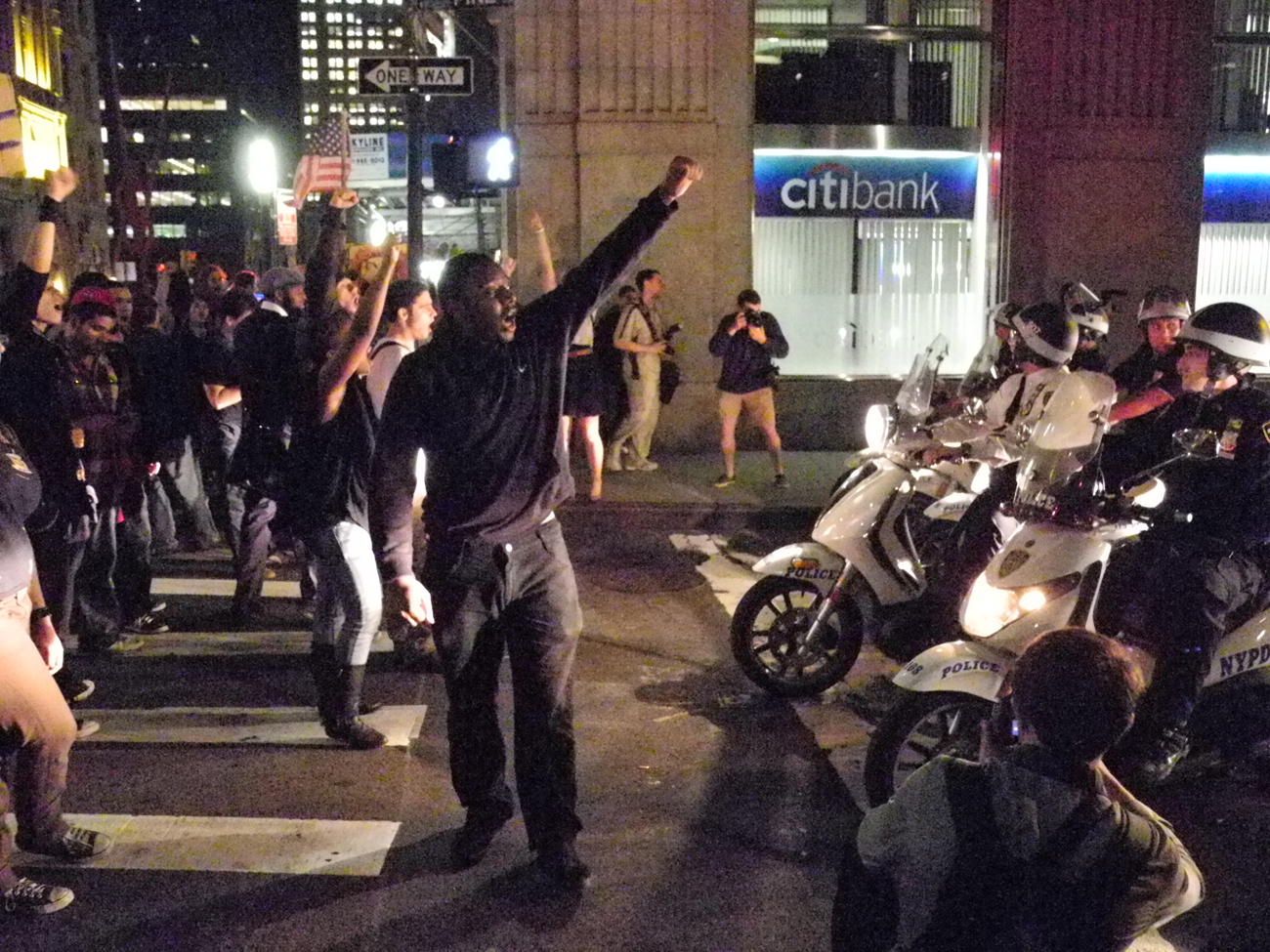
Crack Down at Wall Street Occupation
6) As the combine of market utopianism and state bellicosity grew, another world wide market collapse would almost certainly occur. It is an open question whether China would escape its effects. The right would draw upon the suffering promoted by that collapse to pursue even more intensely market utopianism. Since a perfectly free market is always a chimera promised for a fanciful future, you can always blame the latest failures on too much market regulation and taxation of “job creators”. 
Chinese Military Trying to Cope with the Sichuan Earthquake. The Earthquake's Devastation Was Magnified by China's Intense Poverty and Urban Density.
6) Vigilante groups, already discernible in this country, would grow in size and type, seeking to silence alternative voices as they infiltrate localities, churches, corporations, and universities. The state and the police would enter into covert alliances with them.   

Such a new type of fascism is certainly not inevitable. It does, however, operate as an aspiration in some circles that already makes a big difference in our politics. It also could occur, if a major terrorist event encountered a Republican President and Congress. It poses a real danger.
In the Immediate Aftermath of Pearl Harbor FDR Interred 110,000 Americans of Japanese Heritage. Although Reparation Were Paid Korematsu v. U.S. Still Affirms the Constitutionality of Racial Internment.
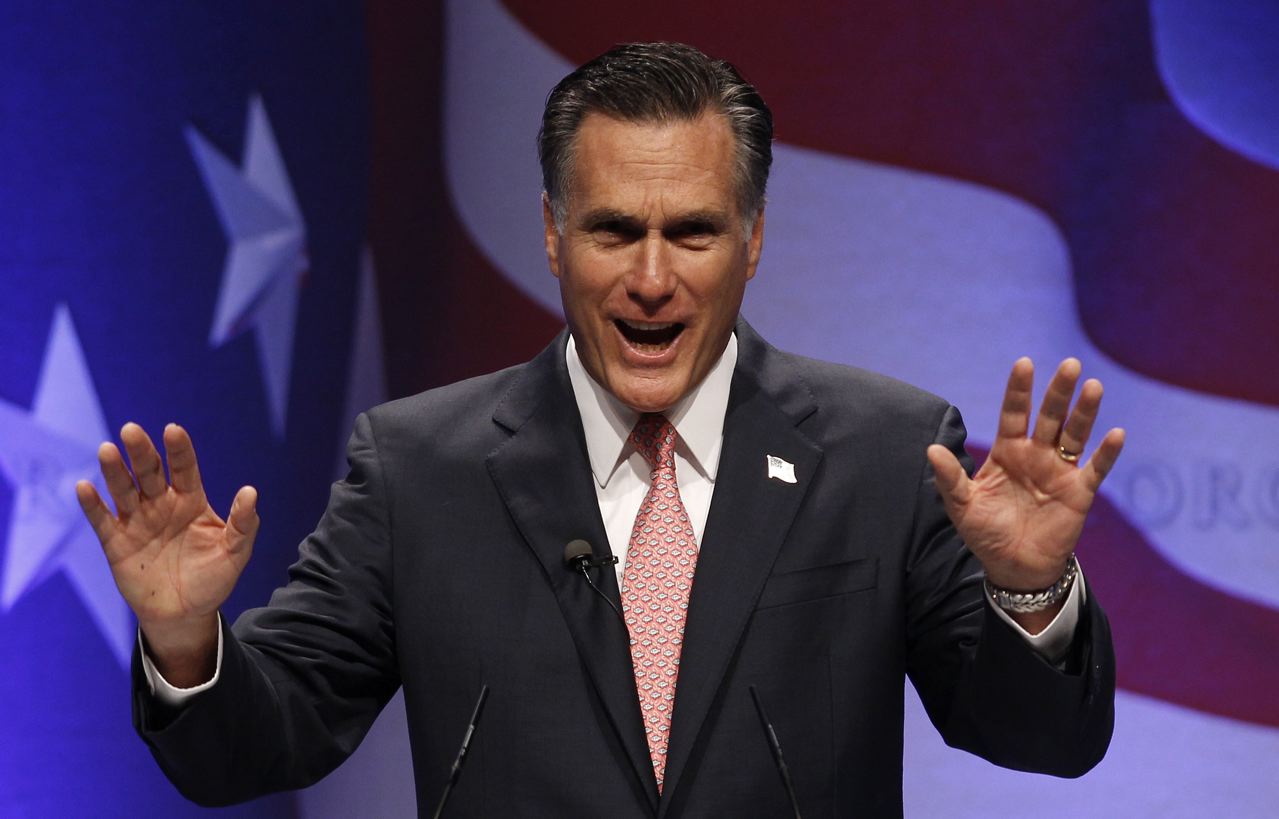
The immediate question is how to criticize market utopianism more effectively as we identify the dangers it promotes, the denials it demands, the suffering it fosters, the unfocussed anger it unleashes, and the repressive, militaristic state it solicits to sustain its fantasies. Above all, how can we awaken a large constellation of “Independents”--who first try to ignore politics as much as possible and then become susceptible to slightly softened versions of right wing sound bites when a crisis emerges. Here Mitt Romney, perhaps, is even more dangerous than Rick Perry, as he exudes a willingness to be the soft voice of a rampant minority movement. The secret of the neoliberal/evangelical machine resides in the way that it promises smooth markets for the future as it feeds off crises of today it helps to foment. 
Barack Obama, for all his eloquence, is not good at exposing these drives and dangers. Paul Krugman, for all his economic insight, does not crack through either. Academic radicals have insufficient reach and connections on their own. Steve Colbert and Jon Stewart show merely a few flashes of brilliance in this regard. What then? Some noble intellectuals in the American Jewish community are now speaking out actively about the American/Israeli/Palestine quagmire. A forthcoming documentary by Bruce Robbins at Columbia University is promising in this regard. Recently, I have begun to wonder whether Rachel Maddow and Elizabeth Warren might provide hope in exposing the insidious character of this machine to a wider audience.
The Daily Show With Jon StewartMon - Thurs 11p / 10c
World of Class Warfare - The Poor's Free Ride Is Over
www.thedailyshow.com
Daily Show Full EpisodesPolitical Humor & Satire BlogThe Daily Show on Facebook
One thing seems clear, however: it will take enhanced participation by more people in the micropolitics of families, churches, unions, localities, consumption cooperatives, universities, the new media, protests, and corporate exposes to pave the way for the social movements and electoral coalitions needed today. Connections to social movements in other countries are critical too. In these respects protest movements on Wall Street and in Wisconsin, along with militant protests against austerity in England, Greece and elsewhere may be promising.


Wednesday, June 29, 2011

The Republican Pincer Machine


William E. Connolly

Johns Hopkins University


The basic situation is clear. Despite campaigning during a period when the opposing Party was saddled with an unfunded, irrational war and soaring inequality, Barack Obama’s 2008 campaign did not climb over the hump until a week after the September 15th meltdown. At that point McCain faltered, and many voters took another look around. Obama was cool and competent during this crisis. And the consummate campaigner soon became the front runner, if not by the margin you would expect under such dire circumstances.

Coming into office, Obama faced a huge debt assembled over the Bush years, amplified by the bail outs of banks. Unemployment soared and the economy was frozen. He concluded that it was necessary to stimulate the economy in the Keynesian tradition. Homeowners, consumers, banks and corporations were no longer active, so the government had to provide a stimulus of last resort.


Left Keynesians, such as Joseph Stiglitz and Paul Krugman, insisted from the start that the Obama stimulus was neither big enough nor focused properly. It contained too many tax cuts for upper income people and insufficient job creation through projects to rebuild the economic infrastructure: fast rail, new electrical conveyor systems, green energy projects, highway construction, urban housing, and school construction. Obama argued that his modest program was needed to avoid a Republican filibuster. Many others thought--I was among this group--that this was precisely the time to incite such a filibuster from the radical right. If Republicans enacted one at this stage they could be seen, accurately, as an obstacle to recovery from the meltdown they had created; if they caved, the economy would be stimulated along tracks that were favorable to the future of everyday people and America in the world.


This is when the Republican Party set its trap. Meeting in closed sessions at the beginning of the Obama regime, the party of tax cuts for the rich, unfunded wars, and the largest deficit in the history of the country redefined itself. It suddenly became the party of deficit reduction through lean government joined to supreme confidence in unregulated financial and corporate markets. It even opposed the bail out of General Motors and Chrysler, though these actions stopped unemployment from reaching a dangerous tipping point, allowed the two companies time to reconstruct themselves, and enabled them to pay back the loans within two years–-creating one of the most successful bailouts in the history of Euro-American economic life.

Now the pincers machine was in full motion. The first pincer was systematic refusal to support programs that would pull the economy out of the dangerous recession within a year or two. That refusal would create failure for which the President and Keynesianism could be blamed. The second, one that surprised many with its quick success, was to redefine the issues until the problem with the economy became the stimulus itself rather than too small a stimulus.

Obama aided both strategies by presenting his small, unbalanced stimulus as sufficient to the task. But, still, the Republicans had to construct a deft strategy. They had to convince a large section of the electorate that the party of profligate military spending, economic meltdown, and tax cuts for the rich when in power was actually, now that it was out of power, the guardian of a self-sustaining market economy that only needed the state to get out of the way. This vision was attached to a simple idea of entrepreneurial, consumer and worker freedom in an unfettered market economy, a vision that deflects attention from the draconian disciplines they are actually willing to impose on regular people in the name of a small state. If you want a sense of what the latter measures are check out the policies of recently elected Republican governors and legislatures in Wisconsin, Michigan and Ohio. If you need more check out the repressive worker policies of Walmart, recently vindicated by the gang of five Republicans on the Supreme Court.

So the trap sucked Obama into a small stimulus in an attempt to gain Republican support; then Republicans voted against it; then they treated the stimulus as THE source of the problem; then they insisted that a return to unregulated markets and tax reductions for the rich would cure all evils. Why did such a strategy work as well as it has?


The answer is that some sections of the populace were already primed to accept such a simple conception of freedom and vision of market self-sufficiency, even if acceptance required it to forget how the Bush regime of unfunded wars, low taxes, and deregulation had created the crisis and even if it was often against their economic interest to support such a story line. But, again, why accept such fantasies so quickly?


The reasons vary from constituency to constituency. First, many young people of relative affluence were pushed in this direction by the pressure to believe in the stability of the system in which they seek to forge professional and entrepreneural careers. Second, there is a distinctive sense of special entitlement among the rich and super-rich in America, a sense that encourages them to support the myth of a self-sustaining market economy whose main problem is large state expenditures and regulation of banks, derivatives, Wall Street and corporations. Call it American exceptionalism. Moreover, their wariness of “entitlement programs”–-those self funded programs of Social Security and medicare upon which so many Americans depend---provide ideological cover for the more fundamental sense of class entitlement they feel. They feel entitled to a corporate economy that allows them to wrangle an ever increasing share of the income and wealth from it, even while other classes tread water, or worse.

That covers two constituencies. But what about others? I have contended in Capitalism and Christianity, American Style that many anxious white males in the working and middle classes seek alpha models of masculinity with which to identify in a world of declining manufacturing jobs, perceived pressure from multiple minorities, and growing economic uncertainty. Given such a preliminary disposition, many are drawn to corporate elites, sports heroes, financial wizards and military leaders who project alpha images of freedom as independence, mastery and virility. That sense of freedom can then be nudged toward idealizing unregulated markets within which virile masters work their miracles.

On the other hand state welfare programs, market regulations, state retirement schemes, and state protected health care, while essential to life, remind too many of the very fragilities, vulnerabilities, susceptibilities and dependencies they strive to forget. So they are tempted by the idea of freedom as mastery. Many, certainly, resist succumbing to such pressures, out of concern for their children and the future. But others succumb, simplifying the experience of freedom until it is dissociated from the quality of work life, social interdependency, collective action, union organization, local associational life, and the like.


So the Right becomes the bearer of “freedom”, while the Left becomes the bearer of “welfare” disconnected from it. A dangerous combination.

There is a double bind at work here. First, masculinization of the market and feminization of state welfare draws many in the white working class toward the myth of unregulated markets. Second, attempts to draw attention to how the first bind works intensifies resentment among these very constituencies against the Democratic Party, the welfare state, and state regulation. The account seems to challenge the image of freedom they express. Obama found that out in 2008 when, in a fundraising speech leaked to the media, he noted the resentment felt by many members of the white working class. To point to the bind and the pressures to stifle enunciation of it is to risk deepening the bind. That is the second bind in the double bind.


The political formula of the radical right is thus effective while dangerous to the country. On the other hand, to ignore the double bind is to forget the suffering of the working class, to court the loss of an urgently needed constituency, and to risk allowing the rightward drive of the country to continue.

Neoliberal heroes, Fox Talking Heads, and evangelical publicists help to incite the vulnerabilities in question; they then feed upon the struggle of many white males to conceal them from their families. This pincers movement helps to explain the Tea Party, which, by the way, is not “new” but merely the latest incarnation of an “evangelical-capitalist resonance machine” that has helped to define the public philosophy of America since 1980. Clinton and Obama swim in these waters, even if they sometimes make faint efforts to climb out of them.


Yes, the Republican pincers movement works in part because a Fox News/think tank/ publicist machine reiterates its assumptions every day. But it also works because many anxious male members of the white middle and working classes are predisposed to its message.


The probability, then, is that the next election will be close. It could also be fateful. Not because it is apt to enable the kind of electoral transformation the country urgently needs. But the Republican Party already has a majority on the Supreme Court, which increasingly attacks the rights of workers and consumers. If it captures the White House and both houses of Congress it will pass Draconian measures and deploy repressive tactics to stifle public dissent. All in the name of freedom. What to do?

Of course new and surprising events could shuffle things again, as they have at times in the past. The politics of the event does periodically erupt. But it is not wise to count in advance on those events breaking the best way. To me, the first thing to do is to explain in sympathetic ways what kind of pressures the white working class faces today, without caving in to tendencies within a segment of this class to demonize minorities.


The second is to remind people forcefully how many times tax cuts for the rich and market deregulation have generated economic crises, starting with the Great Depression.


The third, and most fundamental, is to challenge head on Republican definitions of freedom through anti-labor and anti-consumer policies of the state joined to a vision of market self-sufficiency, elaborating a richer story of how freedom works and how deregulated markets demean it.


The fourth, which can only work if the third is under way, is to propose an ambitious jobs program that, if passed, would simultaneously rebuild the infrastructure to meet the needs of the twenty-first century, provide meaningful jobs for high school graduates, stimulate the economy, and promote real freedom for families, workers and consumers.


The fifth is to insist, against the grain of the Republican story, that tax increases for the rich and a regulated economy are desperately needed to avoid a new version of the most recent meltdown.


To me, the third element provides the lynch pin.


Such a counter formula is insufficient to our troubled time. But it may provide a needed start. It might create sufficient momentum to attract a larger minority of white working class voters to join a vibrant assemblage of the young, gays, Hispanics, African Americans, many women and a growing constellation of Jews, Muslims and Christians who are ashamed of the way their faiths have been represented by the religious right.

Sunday, April 3, 2011

The Politics of The Event


William E. Connolly 
  Johns Hopkins University

The rebellions in Eastern Europe, the collapse of the Soviet Union, the rapid rise of neoliberal capitalism in Eastern Europe, Tiannamen Square, the birth of gay rights movements in the United States and Europe, the formation of the evangelical-neoliberal resonance machine in the United States, the claim to a right of doctor assisted suicide in a world in which many thought the list of human rights was complete, the (nearly) world wide economic meltdown, the rebellion in Iran, the popular transformations in Tunisia and Egypt, the birth of a civil war in Libya, the eruption of protests in Wisconsin, the earthquake, Tsunami, nuclear crisis in Japan...

Each of these moments embodies the essential characteristics of an event: it happens rather rapidly; it throws regular institutions into turmoil, uncertainty or disarray; its antecedents often seem insufficient to explain the course of its expansion and amplifications; its settlement, when underway, is uncertain; it makes a real difference in the world, for good or ill. 
Each time an event unfolds or erupts hope and anxiety accompany it, in different ways and to different degrees during each event. And many initially outside its compass are rapidly moved to intervene, in attempts to support it, to redirect it, or to squelch it. An event starts out of apparent uncertainty and foments a wider band of uncertainties as it expands and morphs. Events emit contagious and infectious energies. Sometimes democracy or dictatorship hangs in the balance. Or the creation of a new right, faith or identity. Or the denial of one or more of those.
Events startle, provoke and energize; they can also disturb, defeat, alienate and sow resentments. They, therefore, form part of the very essence of politics. A secondary effect is how events often throw Intelligence experts, media representatives, political leaders in other places, and practitioners of the human sciences into intense bouts of self-doubt and self-scrutiny. “How come we did not anticipate this,?” ask the Intelligence agencies. “What were our leaders doing?,” say media talking heads. “And what about those of us in the media?” “How come we did not predict this?”, whisper political scientists to each other, before they catch themselves enough to recall that they only promise to predict hypothetical events under conditions in which the “variables” are strictly specified, not to explain actual events in the messy, ongoing actualities of triggering forces, contagious actions, complex and floating conflicts, obscure purposes, subterranean anxieties, and contending hopes. But why do so many remain committed to these protective maneuvers in the domains of the intelligence, the media, political leadership and the human sciences? Do they demand a world in which they can be in charge so much they are hesitant to sink into the messy reality of things underway?
At The Contemporary Condition we are magnetized by the politics of the event. We strive to dig into it, think with and against it, even sometimes to nudge it in this way or that while it is underway. We are mesmerized by its combination of uncertain origins, messy modes of self-amplification, and fateful possibilities. Sometimes an event fills us with hope, sometimes foreboding, sometimes with despair. But how should we grasp the very idea of an event? What about those of us located within departments of the human sciences, such as political science, economics, sociology, anthropology and geography? Each unexpected event, in fact, creates a flurry of discussion in the human sciences between those who think politics can be comprehended in classic categories of explanation and prediction, those who wish they could believe that but actually doubt it, those who adopt qualitative or interpretive approaches, and those, most recently, who think that attention to the event carries you into territory that is not entirely reducible to any of these dominant perspectives. These conversations go on between us and within us when a fateful event occurs. 
Are regular processes periodically punctuated by protean moments in which a degree of real uncertainty in this or that domain arises, accelerating fluctuations within a domain, or between two domains, until the event could really tip in one of two or more directions of real potentiality? Or is uncertainty “in principle” fully explicable by reference to limitations of available “data,” deficiencies in available techniques, a lack of information, or ethical limitations that disable hard scientists from “disaggregating” complex formations to discern how they have hold together. Like poor old Humpty Dumpty who was intact at one moment but too complicated to put back together after he fell. Do practitioners of predictive explanation promise to predict hypothetical futures when in fact they typically explain past events to defer this task indefinitely? Are you bored by rational choice theorists who continue to “retrodict” the origins of the civil war in America, implicitly feeding off the fact that the actual outcome is known in advance ?
Perhaps we periodically live into futures replete with elements of real turmoil and uncertainty. Even more, perhaps those same strategic moments sometimes secrete a degree of real creativity, for better or worse. Perhaps vague frustrations and volatile energies were in the air the day before Mohamed Bouazizi immolated himself in Tunisia. Too intense to be ignored, too vague to be defined. Did that sad event, in turn, help to trigger something that would not have arisen a month earlier or a year later? Even more, were protean energies floating around before the event too vague to enable an “ideal observer” before the fact to predict what combustible processes would be set into motion by the event? Perhaps the rebellion in fact arose through a surprising condensation of vague, intense, collective energies. Maybe it then became contagious beyond anybody’s ability to predict before the event? Perhaps it became consolidated through processes of self-amplification and self-organization that both exceeded the triggering moments and contracted those vague intensities into something that did not preexist the event.
Are there sometimes protean moments in politics in which real creativity comes into play, propelling a new formation, regime, identity. movement, right, or meltdown into being, for good or ill? 
Many practitioners of the human sciences increasingly believe that proponents of classical practitioners of quantitative, predictive inquiry in those sciences simplify the world to make it clean enough for them to use their preset categories and demands. Maybe when they played in the mud as young boys their mothers called them in too soon to wash up. We even suspect that some established regimes of qualitative inquiry, while indispensable, rich and subtle, are too tied to the pursuit of a stable nation, a fixed locality, a stable tradition, or nostalgia for long, slow modes of temporality.
Perhaps it is timely today, then, to draw selective sustenance from work in complexity theory in neuroscience, biology, geology, and critical philosophy, as well as from minority movements in the human sciences themselves. Doing so to reconfigure our own practices and role definitions. Stuart Kauffman, the biologist and complexity theorist, provides a fine place to start. (See Reinventing the Sacred) Maybe it is timely to transfigure our own activities and selves so that we can come to terms in more supple ways with the politics of the event, and so we can pursue thoughtful responses to some uncertain situations as they are unfolding into the mystery of the future. We seek to participate in the human sciences while dropping the hubris of explanatory sufficiency in principle. To pursue such a trail we must supplement modes of efficient and probabilistic causality with an idea of emergent causality that requires us at key moments to follow real modes of creativity as they unfold to produce new outcomes. In between those events–because there are periods of relative regularity in several domains--we seek to show people why so many are driven to these hubristic images of the human sciences and to learn with others how to think and act creatively within the compass of the event while it is underway. (Connolly, A World of Becoming)
We expect the open systems which we study and in which we participate to go through periods of relative stability, only to be punctuated at key moments by surprising accelerations and accentuated instability. Such accelerations can be triggered when one open system is touched or battered by another with which it is imbricated, as when the effects of climate change, itself intensified by capitalism, sends pressures back to capitalism, and it in turn responds. There is an event in the making. Sometimes vague intensities not yet condensed into precise focal points, accumulate below the radar of effectivity and discernibility. Sometimes both things happen together, composing a dissonant connection with pluripotentiality.
When such moments of disequilibrium arrive, notions such as criticality, asymmetrical rhythm, vague intensities, vibration, condensation, resonance between systems, self-organization, amplification, emergent causality, and real creativity become particularly pertinent. Not merely as metaphors, but as operative in real processes during moments of phase transition. Admission of these notions into the human sciences, in turn, must be joined to a willingness to act sometimes into the future during unsettled circumstances. Instead of always waiting until the issue is settled in this or that way so that the established “tools” of hubristic science acquire some plausibility again. Yes, those latter tools do have limited applicability in between events, but lose it during the advent of the event.
Some colleagues in the human sciences scoff at such formulations, particularly after things have settled down in this or that domain. Economists take cover for a year or so after the latest meltdown, only to re-emerge with confidence when things settle down. Political scientists repeat the word “in principle” to each other until it infects their dream lives. Here are a few questions to both types: Do you scoff because of the real achievements of your model of explanation in settled and unsettled times, or to protect professionals from the responsibility to act during this or that moment of phase transition? Do you in fact believe that there are elements of real creativity in the plastic arts, in music, in literature, in philosophy? Have you yourself, indeed, not periodically had a new thought or idea come to you, as if from nowhere, when you were walking or going for a long, slow run? If so, is it not possible that the modes of real creativity in the activities noted above also find degrees of expression in politics, ethics, regime formations, and economic processes? If these latter things seem plausible, is it not likely that any interpretation of culture, agency, political movements, surprising eruptions and the like that attains plausibility will do so because it forges a valuable interface with relevant literary, philosophical, artistic and ethnographic work? For if there is an element of real creativity in politics and ethics, literary and artistic activities both make contributions to that element and need to be folded into the very lifeblood of the human sciences. How could these two domains remain compartmentalized now?
Okay, so what about natural events? The sciences of complexity in some zones of natural science, such as neuroscience, evolutionary biology, and geology, locate whispers of the same processes in natural events. Perhaps, as James, Whitehead, Bergson, Nietzsche, Deleuze, Stuart Kauffman, and Ilya Prigogine each thinks in his own way, there are also moments of criticality in species evolution, climate change, geological processes, ocean current shifts and so on that also contain elements of real uncertainty and real creativity. But that issue must await a future post. (As a preliminary see “The Fragility of Things” and “Hyperobjects")

Thursday, January 13, 2011

The Radical Right, The Extreme Right and The Republican Party


William E. Connolly
Johns Hopkins University


We have heard a lot lately, on the moderate media, about how it is time for leaders of the Republican Party to step forward, to exhibit enough courage to repudiate the extremism of the Tea Party, the language of violence peddled by Sarah Palin, Michel Bachmann, Sharron Angle and others, and the charges of Fascism and Socialism made against Barack Obama by Glen Beck and Rush Limbaugh. 
The Republican leaders, they say, need to marshall “the courage” to call the extremists out. It is time to stop being “intimidated.” This language has emerged once again in the wake of the Arizona killings, and it is typically joined to ridiculous statements that both the Left and Right need to “tone down their rhetoric.” But there is a significant difference between radical rhetoric on the left or right and the extreme rhetoric of violence on the Right. This distinction is too often lost on those moderates who do not themselves speak out clearly enough against the language of violence. 
My concern today, however, is not with moderates (See Militant Pluralism and Exclusionary Extremism). It is with Republican Party leaders who refuse to oppose firmly the violent rhetoric of the extreme Right. Is it because, as moderates say, they lack courage? Or because, at some level, they identify and are protected by these same extremists? Sure, a few Republican leaders may lack courage, but it seems that a lot more are silent because their own radical fantasies of market purism, a small state, the absolute freedom to bear arms, and the reduction of “entitlement” programs is protected and buffered by the extreme Right. The extreme Right, in looking for a final battle to defeat the left and the middle, allows them to sound moderate. The extreme Right also provides the mobilization machine the radical Right solicits and needs.
The real situation is thus more disturbing and dangerous than moderates admit. A majority of Republican activists and leaders, joined by a large section of Republican Party followers, is attracted to the extreme ethos of the Tea Party, Limbaugh, Palin, Beck, Bachmann and the gang. Only they are too cautious to admit it directly because they fear that straight out admission would weaken them with Independents. That is a better explanation of the selective statements and silences in and around the Party since the election of Barack Obama. 
That is why the leaders are either silent when a political killing occurs, or explain away any connection between that killing and the violent rhetoric of the extreme right, or introduce a crude equivalence between the dissident left and the extreme right, even without identifying cases in which the first group deploys the language of violence or is involved in violence. 


For Examples of the Right's Violent Demonization of Liberals
These Videos Were Circulated Before the 2010 Midterms Under the Title
"America Rising" 
That is why they equate Sean Hannity with Keith Olbermann. That is why most celebrate an ever loosening of gun control laws; that is why they act as if “entitlement” programs are socialistic; that is why they campaign militantly against financial and corporate regulation in the name of a pure market that has never existed anywhere; that is why they speak in the name of a single, bellicose God for all Americans rather than a society of deep pluralism; that is why they resist unemployment insurance for the lower middle class; and that is why they push the filibuster envelope to the most extreme degree in the history of the country. 
Did you check out that recent Republican gathering when the leaders competed with each other to demonstrate who owns the most guns? What Republican leaders, today, call for gun control, even while they are happy to locate total responsibility for violence on a deranged individual who had ready access to a weapon with multiple clips capable of firing thirty shots at a clip?
So, we must distinguish between the radical Right and the extreme Right, while keeping alert to subterranean links between them. When the radical Right celebrates “the individual,” it also celebrates a predatory, unregulated market that places the lower and middle classes in a squeeze, promotes even more inequality, and periodically places the country and the world at the risk of collapse. 
At least four members of the Supreme Court are members of this radical Republican gang, too. They love to think of economic corporations as “persons,” while reducing the rights and protections available to regular people. They call themselves constitutional “originalists”–-only committed to following what the founders “intended”--while creatively reading the second and fourteenth amendments to support a world with more guns and more corporate power. 
They are “against judicial activism,” but ever so active in supporting the agenda of the radical Right and giving the extreme Right the armaments they seek. Several will vote against the mandatory provision in the recent health care legislation, but not because the constitution makes it necessary to do so. They will do so because they already support a radical version (or fantasy) of a minimally regulated market, without ever coming to terms with how minimally regulated markets generates crises over and over. 
The extreme right provides ideological cover for the radical, corporate, pure market, assault weapon supporting Right. with its eager embrace of state-corporate entanglements whenever it produces dividends for the rich. The radical right does not want to be touched by the dirty hands of the extreme right. But they don’t want to restrain or civilize it either. This is not because of a lack of courage. But because of a lack of integrity and care for the health and safety of a vast majority of the population.
It is time to stop talking about the need to generate courage among moderate Republicans. It is time, rather, for the moderate media to find the courage to define things as they are, even as the truth will bring down the wrath of the radical and extreme Right together. What is that truth? The radical Right of the Republican Party has fallen into an illicit love affair with the extreme Right attached to the same Party. Otherwise they would support significant gun control instead of handing weapons to the very same people they call “deranged individuals” once a killing occurs. They would also support effective programs for mental health in America, instead of leaving that issue “to the market.”

LinkWithin

Related Posts Plugin for WordPress, Blogger...