Showing posts with label Electoral Politics. Show all posts

Tuesday, September 27, 2011

Aspirational Fascism

William E. Connolly
   Johns Hopkins University
                                                                           
    In an earlier post, entitled What Was Fascism?, I responded to a set of right wing pundits who treat social democracy, liberalism and a welfare state as modes of fascism. The logic behind that equation is simple: unregulated markets promote consummate freedom and rationality; state regulation of markets stifles both and produces irrational intervention in the daily lives of people. One point of my post was to remind people what these revisionist histories seek to forget: Drives to European fascism were triggered above all in the thirties by the advent of the Great Depression; and that Depression was produced by practices of market utopianism. While market utopianism was not itself fascistic, the collapse it fomented helped to spawn fascist movements in several countries and to intensify them in others. Only a few actually succeeded. But the results were devastating.
There were several characteristics of fascism the first time around. It was virulently anti-semitic, propelling death camps in its most extreme version. It also defined social democrats, communists, homosexuals and the Romani as degenerates, deserving to be placed on the dumping grounds of history. Its racism with respect to non-Europeans was virulent. Where it succeeded, it introduced a one-party state, disallowing electoral challenges, to say the least. The success of fascist movements, when they did succeed, was spurred by a dark series of resonances between the state, industrialists and local vigilante groups who spread terror in the streets. These versions of fascism were also capitalistic. Profit and ownership of the means of production were private. Fascist capitalism replaced the myth of market self-sufficiency by one of exclusionary national unity, brownshirts, bellicose militarism, police repression and aggressive war policies.
It is thus a mistake to equate every large state with fascism, as the radical right loves to do under the umbrella of market utopianism. In fact, it is difficult to find a capitalist state anywhere that is not also a large state, though the priorities of such states do vary significantly.
2008 RNC National Convention St. Paul, MN
One critic of that post suggested that I had merely pretended to read Hayek. Hayek, of course, was an early purveyor of the view that regulated markets promote a fascist state, though socialism was his key target. He presents an uncanny mixture of the insightful and the fanciful: a fascinating account of freedom, spontaneity and social processes of self-organization; a utopian view of market processes as the only place such processes occur; and a homogeneous suspicion of any large state, however distinctive in aim, accountability, and organization. He was not a friend of aspirational fascism. A critique of Hayek, joined to a corollary appreciation of his early engagement with complexity theory, could thus be timely. He was, for instance, wary of any association between the state and religious enthusiasm. It is too bad, then, that he confined the play of spontaneity and real complexity to economic markets, setting into motion an ideological movement that denies the role of spontaneity and self-organization to social movements and, indeed, to a much larger host of interacting human and nonhuman domains (See The Fragility of Things). Welcome to the world of under-regulated markets and rapid climate change, Mr. Hayek.
2011 Texas Wildfires Bastrop, TX
What about aspirational fascism today and the possibility of its enactment in America? Its reoccurrence, if it happened, would express some continuities with the past punctuated by a series of significant differences. To detect hints about those affinities and differences, we can listen to Republican, Tea Party candidates such as Michelle Bachmann, Rick Perry and Newt Gingrich; we can heed the expressions of hate and ugliness regularly spouted by an active minority in their audiences; we can recall the Tea Party’s willingness to shut down the government to support the ends of a minority movement; and we can attend to repressive police practices already underway in American cities. Here is what such listening suggests:
1) Neo-Fascism, if it were to arrive, would not take the shape of one party rule. The media, corporations, the state, and vigilante groups together would cow constituencies on the middle and the left. The minority party would offer only weak resistance to the policies of the right, and some sections would collude with it.
2) Anti-semitism, while hovering in the wings, would be displaced by virulent opposition to all Muslim groups, within and outside the country. Gays, feminists, professors, atheists, and union leaders would also be on the list of enemies. The war on terror would morph, as it is always on the verge of doing, into a war on Islam as such. The most right wing tendencies in Israel would be supported enthusiastically, even as calls to make America a more Christian nation intensified. Those two apparently incompatible drives can be sustained in some circles by saying that the first stage of Armegeddon will arrive in Israel, to be followed by the Second Coming in which only Christians are rescued. You don’t need to worry about the devastation of the earth if you are waiting for the Second Coming; you don’t want to if you are committed to a neoliberal image of production, consumption and markets. Such a combination, to the extent it succeeded, would silence a large and growing section within Christianity that eagerly supports a pluralist culture. 
3) Carbon based sources of energy for production, consumption and military operations would be celebrated and extended. The dangers of fracking and nuclear power would be ignored. Climate change would be ridiculed. And imperial operations designed to protect traditional modes of energy would be launched.
Hydro-Fracking Run Off
4) As the effects of climate change foment suffering and disorder in several regions, the United States would become even more of a garrison state, invoking massive state power to barricade its borders and creating a series of wars in vulnerable or oil rich regions.
In Violation of the 1878 Posse Comitatus Act U.S. National Guard 'Lends a Hand' to the Border Patrol and So Called 'Citizen Soldiers'
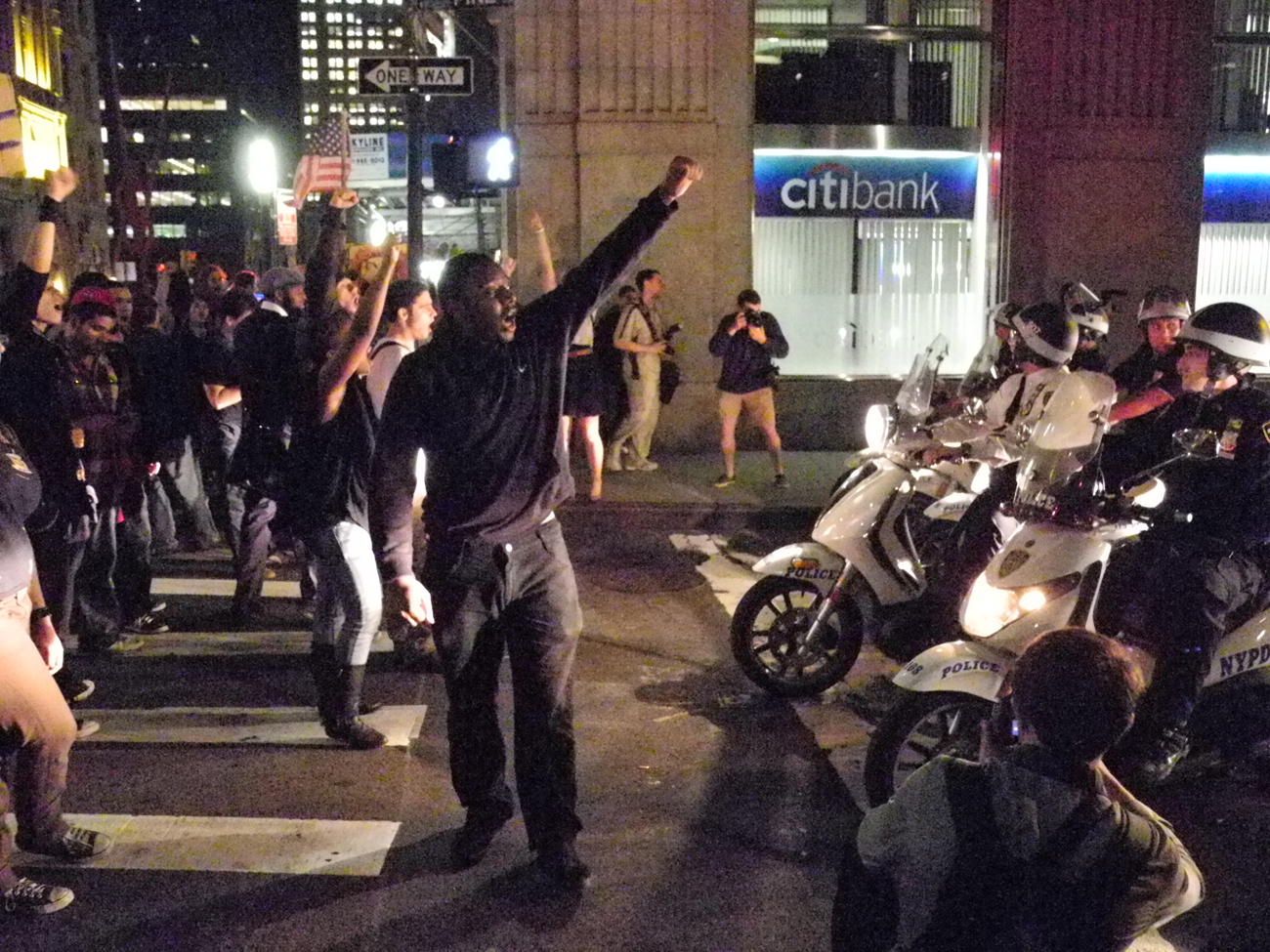
5) As market utopianism, unlimited corporate campaign money, and state repression grows, inequality of wealth, income and communicative power would become even more extreme. Attempts to protest these developments would foment more intensive modes of state and media repression to disparage and silence them. You might think that the Supreme Court would help here, but its recent drive to give more rights to corporations as “persons” than to living persons is hardly reassuring. The majority of the current court participates in the ideology of market utopianism. 
Crack Down at Wall Street Occupation
6) As the combine of market utopianism and state bellicosity grew, another world wide market collapse would almost certainly occur. It is an open question whether China would escape its effects. The right would draw upon the suffering promoted by that collapse to pursue even more intensely market utopianism. Since a perfectly free market is always a chimera promised for a fanciful future, you can always blame the latest failures on too much market regulation and taxation of “job creators”. 
Chinese Military Trying to Cope with the Sichuan Earthquake. The Earthquake's Devastation Was Magnified by China's Intense Poverty and Urban Density.
6) Vigilante groups, already discernible in this country, would grow in size and type, seeking to silence alternative voices as they infiltrate localities, churches, corporations, and universities. The state and the police would enter into covert alliances with them.   

Such a new type of fascism is certainly not inevitable. It does, however, operate as an aspiration in some circles that already makes a big difference in our politics. It also could occur, if a major terrorist event encountered a Republican President and Congress. It poses a real danger.
In the Immediate Aftermath of Pearl Harbor FDR Interred 110,000 Americans of Japanese Heritage. Although Reparation Were Paid Korematsu v. U.S. Still Affirms the Constitutionality of Racial Internment.
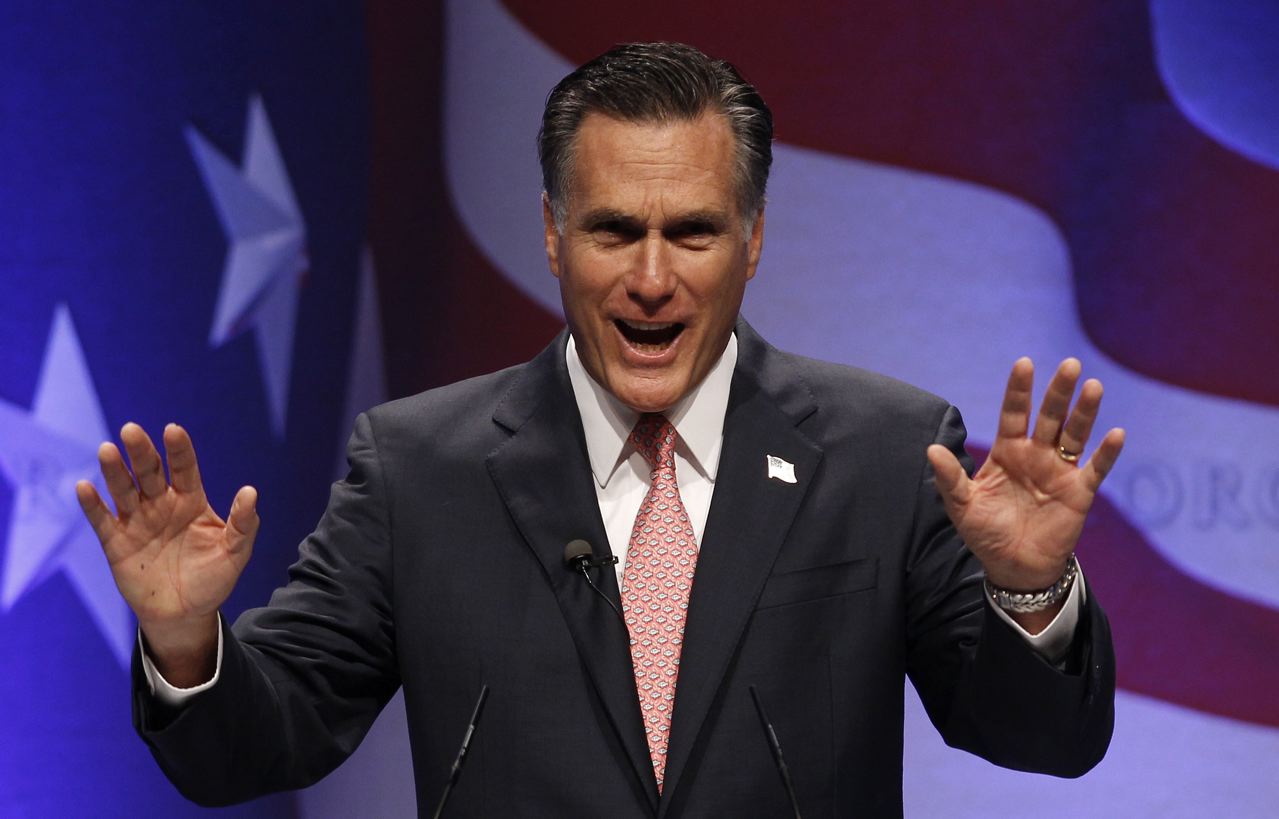
The immediate question is how to criticize market utopianism more effectively as we identify the dangers it promotes, the denials it demands, the suffering it fosters, the unfocussed anger it unleashes, and the repressive, militaristic state it solicits to sustain its fantasies. Above all, how can we awaken a large constellation of “Independents”--who first try to ignore politics as much as possible and then become susceptible to slightly softened versions of right wing sound bites when a crisis emerges. Here Mitt Romney, perhaps, is even more dangerous than Rick Perry, as he exudes a willingness to be the soft voice of a rampant minority movement. The secret of the neoliberal/evangelical machine resides in the way that it promises smooth markets for the future as it feeds off crises of today it helps to foment. 
Barack Obama, for all his eloquence, is not good at exposing these drives and dangers. Paul Krugman, for all his economic insight, does not crack through either. Academic radicals have insufficient reach and connections on their own. Steve Colbert and Jon Stewart show merely a few flashes of brilliance in this regard. What then? Some noble intellectuals in the American Jewish community are now speaking out actively about the American/Israeli/Palestine quagmire. A forthcoming documentary by Bruce Robbins at Columbia University is promising in this regard. Recently, I have begun to wonder whether Rachel Maddow and Elizabeth Warren might provide hope in exposing the insidious character of this machine to a wider audience.
The Daily Show With Jon StewartMon - Thurs 11p / 10c
World of Class Warfare - The Poor's Free Ride Is Over
www.thedailyshow.com
Daily Show Full EpisodesPolitical Humor & Satire BlogThe Daily Show on Facebook
One thing seems clear, however: it will take enhanced participation by more people in the micropolitics of families, churches, unions, localities, consumption cooperatives, universities, the new media, protests, and corporate exposes to pave the way for the social movements and electoral coalitions needed today. Connections to social movements in other countries are critical too. In these respects protest movements on Wall Street and in Wisconsin, along with militant protests against austerity in England, Greece and elsewhere may be promising.


Wednesday, August 3, 2011

Why Do Republicans Hate America?


Steven Johnston
University of South Florida


The political struggle over the nation’s debt, for Republicans anyway, is a battle over government itself. At least since Reagan, Republicans have not really cared about deficits, not as a matter of fiscal principle or prudence anyway. Rather, they seek to wage internecine war against both the idea and reality of government and in this ideological battle the issue of deficits can be a useful weapon, especially if it can be linked somehow to the issue of taxes, which must always be cut. Revenues can never be understood, let alone experienced as a form of social investment. Creating and accumulating large deficits enables Republicans to call for, even demand large reductions in government spending and programs, regardless of their consequences. The strategy is referred to as starving the beast.


Republicans, of course, cloak themselves in the rhetoric of freedom and necessity and express concern about future generations. That the beast they would slay ultimately translates to the lives of American citizens, including some of the most vulnerable who depend on government social programs to which they enjoy legal, political, and moral entitlement, is irrelevant. Hatred of government is a disease with them. They loathe common purpose and project, especially when channeled through the state. Their hatred of government, it seems to me, is tantamount to hatred of country.


It’s time to rethink Republican ideology, aspirations, and rhetoric and ask: why do Republicans hate America? I would ask: why do Republicans hate their country, but I don’t think Republicans, crystallized in the so-called Tea Party, have any sense of belonging to, taking pride in, or sharing a greater common enterprise, that is, a country. Rather, they tend to worship at the altars of casino capitalism, this or that fundamentalist church and its social dogmas, and, perhaps most of all, the untrammeled self.


Consider the following. Republicans have suggested dismantling Medicare and would like to do the same to Social Security. These are two of the greatest public collective accomplishments in American history. Modest as they are when compared to many European countries, they have nonetheless provided generations of Americans with financial security and protected many of them from impoverishment. Yet it is the very success and popularity of these programs that incense Republicans such as Paul Ryan and fuel their furious determination to be rid of them. The same dynamic is at work in Republican hostility toward landmark Civil Rights legislation and protections, remarkable public achievements on behalf of racial equality, which they routinely seek to eliminate and portray as obsolete and infringements upon fundamental freedoms. Why do they hate America?


Republicans also regularly work to subvert America’s system of public education. They try to divert as many dollars as possible to charter schools and other mechanisms that privatize secondary education. Chronic under funding enables Republicans perpetually to condemn the many shortcomings in American education that fiscal starvation itself helps create. Current financial crises allow them to fire teachers and invoke poorly performing schools as evidence that public education doesn’t work in the United States. As for state university systems, Republicans seek to convert them into corporatized spaces where education is reduced to mere instrumentality. Train, don’t educate. Reduce faculty (nothing but leftists anyway), enlarge classes, accelerate graduation schedules, and raise tuition rates so students won’t be such a drag on state budgets. It is the very success of public education (training future generations of citizens and professionals) that infuriates Republicans. Why do they hate America?


Republicans detest public transportation. Governors such as New Jersey’s Chris Christie refuse federal (stimulus) money for light rail and commuter trains in metropolitan areas that desperately need it. That investment in critical infrastructure would put people to work, relieve traffic congestion, benefit the environment, stimulate the economy, and make for a better future count as strikes against it. America’s greatest cities (New York being the most famous instance) would be unthinkable without vast networks of public transportation and other services, but Republicans detest cities such as New York and resent the public collective genius they represent. Why do they hate America?


You might think that the national landscape would be of concern to everyone. The United States possesses countless distinct natural wonders and the government enjoys responsibility to preserve them for generations to come. But rather than make them accessible to Americans to enjoy in common, Republicans would prefer to sell them to the highest bidder and see them developed for crass commercial gain. A form of public or common treasure must be converted into individual assets. As for protecting gifts of nature from pollution, the country from self-poisoning, and the planet from self-destruction, Republicans tend to be aggressively hostile—just drill, baby, drill. At times, this takes tragicomic forms. The House of Representatives recently passed a bill to prohibit funding a 2007 law increasing light bulb efficiency. One indignant Republican Congressman insists: “the federal government has no right to tell me or any other citizen what type of light bulb to use at home.” As for the Republican who authored the light bulb measure and secured its passage into law, he now opposes it. Why do Republicans hate America?


The only collective public activity that Republicans endorse is war, on behalf of which they suddenly become spendthrifts (prison-building has been another growth industry). They demand the right and power to exercise violence at will across the globe on behalf of the national interest. That habitual aggression and expansion leads to catastrophe not only for others but for the United States, as in Vietnam, Iraq and Afghanistan, seems to escape their notice—or, given its contribution to deficits, maybe not. And even in this domain protecting the national interest means guaranteeing the right of individuals to live lives of consumptive ease and abundance, assuming they can “earn” it, of course. Why do they hate America?


What, then, is America to Republicans? It’s a non-place where unencumbered individual (including corporate) interest reigns supreme, which requires for them the minimization, if not elimination, of government. This is not to suggest that a country should be equated with its government. It is to suggest that when Republicans express distaste for public life and institutions (including government), for collective aspirations and achievements, for service to the common good and a sense of social and civic solidarity, especially with those less blessed than they, they evince hatred of America.


Saturday, February 19, 2011

Democracy’s Prisoners of Conscience

Steven Johnston
University of South Florida

The moral and political impoverishment of the Republican and Tea Parties manifest themselves almost daily. How do they respond to political assassination and multiple murders, facilitated by handguns, in Arizona? Celebrate the Second Amendment as a guarantor of American freedom and advocate arming the citizenry with concealed weapons. How do they respond to activist conservative courts that deem unconstitutional even modest health care reform designed to remedy evident injustices? Denounce the evils of government action and hail the decisions as a restoration of American freedom.
If conservatives were as steeped in American constitutional traditions as they believe, they would recognize the absurdity of the first position and the irrelevancy of the second. Freedom and democracy are at risk in the United States and elsewhere, but not because of the specter of gun control or mandatory health insurance (or tax increases, government spending to create jobs, reproductive rights, government regulation, or budget deficits).
The United States, in the first decade of the 21st century, already enjoys two wars to its credit, one patently illegal, the other a miserable failure whose needless, unjustifiable continuation renders it criminal. The country has inflicted great constitutional damage at home and killed tens of thousands of innocents in Afghanistan and Iraq to prosecute these wars. On these questions, however, we hear no protests from the newly installed Republican majority in the House of Representatives. Nor do we hear anything other than bromides about national security from new Tea Party-backed members who prefer to treat the Pentagon budget, which sustains an unprecedented global empire, as more or less untouchable, despite vague pronouncements that everything is subject to fiscal review. Nor do we hear anything from the gun-toting public whose weapons supposedly protect our freedom from government malfeasance.
Once upon a time, a well-armed American citizenry might have opposed national military aggression and aggrandizement. In theory citizen militias resist tyranny at home and refuse imperial aggression abroad. No such convictions inform a professional mercenary army, which the United States deploys (patriotic protestations to the contrary notwithstanding), let alone individual gun owners. The Second Amendment, despite the ideologically-driven decision of an activist Supreme Court, is a collective rather than an individual right. Historically it did bear a certain relation to freedom—but no longer. America is a country awash in guns, but in the last fifty years this didn’t prevent, for example, either Vietnam or Iraq. The Second Amendment signifies nothing more than a consumer’s “right” to satisfy a socially dangerous fetish. The same can be said with opposition to health care, which supposedly relates to the much vaunted freedom of choice in the marketplace.
A democratic notion of freedom lies elsewhere. This is why the dominant responses—ranging from silence to cheerleading to assistance—to Julian Assange’s political persecution are so disturbing. The hysterical diatribes of Joe Biden and Sarah Palin are to be expected; Rachel Maddow’s disgraceful, ignorant December 15 performance on David Letterman and Bill Keller’s nasty, self-serving calumny in The New York Times Sunday Magazine (a friend of the prosecutor brief for the likes of Eric Holder) less so. Of course, The New York Times loves to trumpet its own civic “virtue” and “responsibility,” which Keller does in the Assange piece, perhaps forgetting how the paper marched in lockstep with the Bush Administration’s campaign for war in Iraq in 2002 and 2003. Ironically, The Times and other media outlets are now in the process of establishing their own electronic “drop boxes” for the deposit of classified and confidential material.
As Assange pointed out in a 60 Minutes interview aired on January 30, WikiLeaks’s political and publishing activism fall well within the American political tradition of opposition to established authority. This seemed to escape the sensibility of 60 Minutes correspondent Steve Kroft, who chided Assange for his surprise that the United States would target him for retaliation for WikiLeaks’s exposés, deeming it natural and therefore somehow unproblematic rather than a further abuse of power. Despite America’s (unwarranted) indignation, WikiLeaks opposes illegitimate and abusive exercises of power—corporate or governmental—regardless of country. The idea is to create a more just society, to which freedom contributes, to which WikiLeaks contributes. And democratic freedom is a political phenomenon that finds its finest expression through action-in-concert. One might think here of recent events in Tunisia, abetted by WikiLeaks, or current events in Egypt
As for Assange, when the freedom of one is at stake, so is the freedom of everyone. It is the responsibility of democratic citizens to condemn and resist the state when it threatens not just a single citizen’s political rights, but the liberty of us all by focusing its efforts against a single citizen. This is what we owe Julian Assange and the citizen-and-prisoner of conscience that allegedly provided WikiLeaks with information, Bradley Manning. Eric Holder is doing his secretive best to dust off the Espionage Act of 1917, which Woodrow Wilson used to brutally suppress dissent during World War I, and make it work against Assange.
One democratic organization doing its best on behalf of Assange is Anonymous, a protean cross-state, transnational political force armed with a new set of civic skills to intervene effectively (in part, covertly) against corporate and state assaults on freedom. Like Assange and WikiLeaks, members of Anonymous risk arrest, prosecution, and prison as they resist and seek to reverse undemocratic practices and regimes
The United States does not enjoy a robust history of living up to First Amendment ideals. WikiLeaks has provided the country with another opportunity to match democratic promise with performance. No doubt Obama will lead the way in blowing it. With luck, he will be a one-term president. The time for the democratic left to oppose his renomination is here. He ought to pay the ultimate political price for his repeated democratic betrayals, both at home and internationally.

Monday, February 14, 2011

Perturbed as heck, and we'll take it for a little more: The Banality of Lying in Politics

Emily Beausoleil 
University of British Columbia

The recent piranhic media frenzy surrounding Wikileaks and its founder Julian Assange almost immediately calls to mind the Pentagon Papers leaked exactly 40 years ago; where, though a mere 7,000 Xeroxed documents compared to Wikileaks’ hundreds of thousands, the government claimed the damage to national security was so great that it required stopping the presses – an order thankfully overruled by the Supreme Court and dismissed by seventeen newspapers; where the Espionage Act was first used as an Official Secrets Act, for which it was never intended; where the government similarly demanded the ‘return of information’; and where Ellsberg was likewise accused of treason rather than patriotism. 

And just as in Ellsberg’s case, too, the contents of this year’s July leak was found, as described in a recently released Pentagon letter, not to compromise security in any way, despite claims by US Secretary Robert Gates and Joint Chief of Staff Adm. Mike Mullen, among others, that Assange and his team had ”blood on their hands.” 
Certain differences present themselves, of course: where Nixon worked covertly via the order for a dozen Bay of Pigs veterans to “incapacitate Ellsberg totally,” now Democratic Party consultant Bob Beckel can call for the illegal assassination of Assange on public television, as President Obama’s administration makes moves to create an explicit Official Secrets Act. But like the Pentagon Papers so long ago, Wikileaks has, in the words of an international group of former intelligence officers and ex-government officials who wrote in support of Assange, “teased the genie of transparency out of a very opaque bottle, and powerful forces in America, who thrive on secrecy, are trying desperately to stuff the genie back in.” 
Secrecy and deception are a part of politics, though they inevitably inhibit accountability and public capacity for informed decision-making. As in the case of Vietnam where spin doctors and strategists alike overlooked intelligence documents that noted early on the improbability of winning the war, or the more recent manufacture of weapons of mass destruction in Iraq and a democratically unelected president George W. Bush, or the official claims of combat with armed ‘insurgents’ revealed as false by Wikileak video footage, during the now-famous 2007 killing of 18 Iraqis, including two Reuters journalists, deception is bred into the bone of politics – perhaps it always was. As Ellsberg states in a December interview with Amy Goodman, 
“We’re in an absurd position here with a close down of public discussion of official matters, very similar to that of China. In fact, I even wonder whether there’s a rule that absurd in China. And that’s the kind of information system, I think, that 
our leaders aspire to, and have for a long time.”

But what is striking about this recent case of disclosure is the difference in public response: compared to the public outcry of the 1970s, which ignited protest, fuelled a social movement, and catalyzed the end of the Vietnam War, the public is strangely silent in 2010. Well, not silent, surely – but rather than an eye for the content of these released documents and their implications for democratic transparency and government accountability, all eyes are on Assange, this striking figure stepping on the world stage and the concomitant personal scandal that erupted with impeccable timing; all eyes are on the guerrilla warfare waged in cyberspace between Anonymous and various corporations. Even the accused original source, Bradley Manning, who has been in prison since May, receives his share of media coverage, though the messenger has far more been the target. But with the exception of the New York Times, the actual deceptions revealed by these documents have been all but abandoned by the US media, and likewise public response has been a resounding shrug. 
We’ve gotten pretty good at shrugging, in liberal democracies. A negative definition of freedom helps, of course, construed as the right to be left-the-heck-alone. And since western world leaders saw the atrocities the everyman was capable of during World War One, such passivity has been at times actively cultivated, beginning most famously with the work of Edward Bernays, nephew of Sigmund Freud and originator of the field of public relations, who was employed by corporations and the US government alike to use marketing strategies to siphon this dangerous energy into safer channels. Indeed, Carol Pateman made clear some years ago how such democracies function through, rather than in spite of, the passivity of the majority of the population. What kind of stability, what kind of continuity, could be assured after all, if politics had to make room for the torrent of people who presently feel there is no point? Martin Luther King Jr. makes a similar observation regarding the political power of inaction when he writes from Birmingham Jail that “the Negro's great stumbling block in his stride toward freedom is not the White Citizen's Councillor or the Ku Klux Klanner, but the white moderate, who is more devoted to ‘order’ than to justice; who prefers a negative peace which is the absence of tension to a positive peace which is the presence of justice;...who lives by a mythical concept of time and who constantly advises the Negro to wait for a ‘more convenient season’.” 
But what strikes me about this recent shrug to political deception is how it reveals a general acceptance of lying in politics. We know, don’t we? Are we surprised? The lying in politics that Arendt identified as a core threat to democracy, whether through conscious concealment or unconscious ‘defactualization’ via fidelity to theory, seems now to be only one aspect of, as Raymond Williams first coined it, a “dramatized society.” We live in a culture where the line between performance and reality, between artifice and authenticity, between politics and popular culture has become increasingly blurred. Where identities are cultivated like manicured gardens on facebook, where news stations parade their bias and peddle infotainment, where ‘reality shows’ are clearly staged, where a comedian testifies in character to the Supreme Court and an actor lives and breathes the role of a untalented rapper for two years, where bands are formed around boardroom tables and elaborate hair products can give you that unkempt look, where hipster ‘irony’ comes full circle to earnestness the longer one’s nonchalance is honed and insouciant moustache remains intact. We live in a culture of explicit artifice, and, like the Cubists who were arguably the first to draw explicit attention to the surface within their work, we are aware, very aware, of how much the medium is the message. And yet, as opposed to the Cubists, perhaps, this general awareness of and conscious play with surface is itself somehow less earnest – as if, rather than unveiling a latent truth or essential core, it’s turtles all the way down. In the face of acknowledged artifice, it seems a natural response to cultivate studied indifference and a world-weary arch of the eyebrow. As any middle-schooler will tell you, it’s better to opt out than be the fool. 
This movement to a culture of explicit artifice is paralleled, interestingly, in the world of US cinema, which moved from Method acting’s earnest soul-searching and commitment to the ‘gritty truth’ by actors like Marlon Brando and James Dean post-WW2 – where actors were in therapy as a matter of course and playing Blanche Du Bois almost drove Vivien Leigh insane – to what film historian David Thomson calls “cool pretending” that defines current cinema acting, epitomized by Meryl Streep and George Clooney, where one has a sense the character leaves no traces once the role is cast aside; indeed, that actors are not quite fooled by their own performance, and you have been let in on the joke. 
The pledge to sincerity and emotional truth that defined Method acting have been replaced by a predominance of deft skill and “naked pretense” (which, Thomson says, “you could call...lying, as much as acting”), founded on “a way of looking at the world that says you can't trust anyone, can you? It suggests that—for the moment at least—we have given up on self-knowledge and feel ourselves being massaged or directed by most of our presidents, and nearly all of our eternal performers from Johnny Carson to David Letterman... Presidents move us from time to time, just as hosts make us smile, but most of them warn us that we're in a play or a game.” Such is the contemporary condition in liberal democracies, where sincerity is suspicious and earnestness appears ironic, if not tragic-comedic. 
In a culture where the line between reality and performance is unclear and constantly on the move, it is no wonder, perhaps, that the vocabulary of recent presidential debates has been lowered to a sixth-grade level in response to common conflations of eloquence with insincerity. It is no wonder, perhaps, that comedian John Gnarr is Reykjavik’s latest mayor, and platform promises of a polar bear display at the zoo, free towels at public swimming pools, and coalitions only with parties who have watched all seasons of “The Wire” are more earnest than they first appear. And it seems perfectly appropriate that comedians hold a political rally to restore sanity, while the rise of flash mobs across the western world invokes and enacts a public sphere formerly reserved for public protest – fleeting publics and collective acts now simply for their own sake, as if the performance itself provided a sense of concrete experience and sincere collective that are otherwise absent. Perhaps these performances are an unlikely source of a surrogate ‘authenticity’ – at the very least, they provide respite by explicitly naming the predominance of veneer that is often as obvious as it is undeclared. 
Part of this movement towards explicit artifice is part and parcel of an increasing reflexivity regarding the situated nature of all knowledge-claims, the partiality of perspective – from anthropologists and theorists to jazz musicians, scientists and performance artists, responses to the dangers inherent to claims of ‘authenticity’ and ‘neutrality’ and the ethical obligation to acknowledge the performance within every account have been broad and diverse. And part of this is also, at times explicitly, a response to the lack of such humility within current polemics and fundamentalisms – refusals to, in William Connolly’s terms, “insert a stutter in one’s faith,” that have recently fuelled such vitriol and fear, inhibited reflection, and cultivated new enemies where once were none – perhaps this movement to explicit artifice is a response, if not a conscious call, to calm down, take a deep breath, and count to ten. At the very least, to take a closer look at the medium of the message. 
But one effect of this culture of explicit artifice seems to be a contribution to the politics of inaction. As opposed to the public outcry of the 1970s after the release of the Pentagon Papers that belied a faith in political sincerity and media objectivity now betrayed, we have no such faith. Hence the absence of collective moral outrage, for the fact is that we know we are being deceived; and, in the passing of time and as the facticity of deception becomes one reliable truism, we’re no longer ‘mad as hell’, and yes, I suppose, we’ll take it for a little more. 
Shielded by ironic distance and a rueful grin, armed with sarcasm and a noncommittal shrug, we acknowledge the pervasiveness of veneer, and clear-sighted rather than wide-eyed, we are in on the ruse; we may not know what lies behind it, but at least we recognize the pageantry. We may not know where to direct our dissatisfactions or how to give effective shape to a creeping sense that things are not as they should be, but at least we can’t be called naive. We’re in on the joke, no? Isn’t that something? 
This general acknowledgement of artifice that courses through all levels and arenas of contemporary western culture need not only lead to inaction – as comedians-cum-unlikely-heroes and flash mobs make clear, the performative nature of everyday life might itself offer latent possibilities for collective action. While the potential directions for such collective awareness are rhizomatic and undetermined, I wonder what forms of action might emerge in the absence of recourse to ‘sincerity’ as such – or if, indeed, sincerity might be recuperated, in some form, in the process. This challenge brings to mind another: making “one’s life a work of art,” as Nietzsche and Foucault describe it, requires both brutal honesty regarding the artifice of one’s life and commitment to it nonetheless – both clear-sighted and wide-eyed, somehow. A moving target of a goal, far removed from either entrenched fundamentalisms or evasive apathy. But perhaps it signals a possible, if tenuous, if elusive, model we have yet to recognize in response to a culture of artifice; that, rather than a politics of inaction, such artifice carries with it an ethical demand that is not grounded on essential identity or universal truth, but something else...something else...Damn, it moved.

Wednesday, February 2, 2011

Tea Party Redux: Thoughts and Responses

George Shulman
   New York University


Thought #1: In response to Bill Connolly’s idea of distinguishing the “extreme” from the “radical” right, I wonder whether we should think about the “tea party” as a real social movement (TPM), perhaps on the model Lawrence Goodwyn described years ago in his history of the “genuine” populist movement, or perhaps in comparison to the CIO or Civil Rights Movement. (How is it different to talk about a resonance machine or a social movement?) The TPM has been engendered both by post-fordist capitalism, which has created for some few a material basis for a revivified entrepeneurialism or family capitalism, but also put this new sector at risk, and the TPM has been engendered by a cultural sense of displacement among whites, anchored in post-65 immigration and multi-culturalism. In the phrasing of C.Wright Mills, the TPM links “private grievance” to “public causes” in a way that mobilizes people to form what he called publics. In its anti-immigrant and anti-statist politics, it demonstrates a sense of crisis and urgency about national decline, fury at unwelcome change, and ferocity towards those it deems adversaries. It has an infrastructure (for the populists, traveling lecturers, for the tea party, talk radio and fox) that enables communication among de-centralized grassroots associations. Among its participants affect and creed are intertwined in both inconsistent and protean ways that include sharp disagreements. And lastly, there is a tense relationship of hostility and dependence between grassroots and the republican party and elected officials, even at the state level. What the idea of social movement may NOT reach, that resonance machine does, is the conjoining of very different ideological elements: as Connolly says, the right’s resonance machine is an assemblage relating secular free-market libertarians, corporate elites, and evangelicals. But his description of the “radical” right (the republican party elite, its funders, and corporate base) and the “extreme” right seems closer to the tension typical of social movement politics. (Patchen Markell’s association with Crespino on the white citizen’s councils is very suggestive in this regard while emphasizing the issue of race.) Republican elites gain legitimacy for their project from the ‘extreme’ voices, which do powerful ideological work against any form of state welfare and regulation, but elected elites are now also really afraid of the TPM, because it is willing to defeat incumbent republicans in primaries, and because it seems willing to create financial crisis, to refuse elite notions of responsibility.
Thought #2: To see the TPM as simply individualistic may be mistaken, not only because members articulate ideas of responsibility to family and community, but also because they are enacting the action-in-concert of the political. Maybe the TPM needs to be seen on the model of the “producer” ethos and politics in which a self-declared “productive” class identifies itself against “unproductive” classes above and below it. They speak an intensely exclusionary language as taxpayers (and so as the employed) against surplus or parasitic people unjustifiably supported by liberal elites. 
Their language thus combines race and class to create equivalence among illegal immigrants, poor people and prisoners. They do not challenge but endorse the logic of the market and neo-liberal rationality, and they replenish rather than question the worst of nationalism. Unlike the CIO or the CRM, they focus on the wrong target -the state- not the multi-national economic order and its bio-political disciplines and quarantines. Moreover, they have no vision of the future except as a return to an idealized past, whereas the CIO and the CRM wanted to create an alternative to both past and present. But are we mis-reading the TPM in any way? They do not avow properly “democratic” commitments in the progressive form the left reifies, they interpret equality in libertarian rather than social democratic ways, and so they oppose the extensive state regulation the left endorses, but is the “socialism” they attack in any way related to the corporate state, that we attack, the protection racket that binds political and economic elites? Are there voices among them who reject “corporate welfare” as well as the military-industrial complex or imperial state power? Can their commitment to de-centralization be affirmed in any sense? Can we challenge them to make good on that language more consistently? Is there a sense in which they are democratic not merely liberal individualistic? Is it a delusion to put them in Wolinian terms, to see them as enacting “demotic” power, even if we disagree with them over substantive positions? Is it crazy to ask if there are any strands of affiliation between them and a democratic anti-statist left? 
Thought #3: Paul Krugman says the real issue in American politics is not a lack of civility or the violence of rhetoric by the TPM, but profound substantive disagreements about the state and the market, foreign policy etc. But maybe Krugman is wrong, at least in one regard. For recent polling data suggests that a majority of Americans want the specific policies supported by the left - item by item, in the concrete- but remain opposed to “big government.” They are living that contradiction Marx called a double life. Perhaps, then, what Krugman depicts as a substantive or ideological division applies only to minorities on left and right, while the remaining 60% of the electorate is composed of people who are divided internally as it were, between something like a common sense understanding of their interests, which require state action, and the ‘common sense’ or ideology/fantasy of individualism and its anti-statist phobia.. The democrats have refused to make a strong narrative case to support state actions, therefore, to avoid offending that deep fantasy, and instead they focus on prosaic policy, case by case. But they lose when republican poetry (by the extreme or the radical right) stokes fear of state power. How is the investment in individualism, and the corresponding hysteria about the state, best addressed? It seems to me this is the central rhetorical and political question, and one democrats must address rather than avoid, though addressing it is also risky because it may alienate the “independents” they require.
Thought #4: Does the violent speech of the TPM require us to rethink ideas of an“agonal” politics? I am inclined to defend violent speech, maybe because of a misplaced attachment to memories of my own 60's radicalism -we were uncivil, and self-righteously used violent and demonizing speech. (And yes, we alienated a majority of the population.) In a culture that longs for the non-partisanship of more perfect union, or that seeks to avoid politics through juridical forms, shouldn’t theorists defend agonism, not only as the grounds for advancing a substantive democratic/left agenda, but also as a democratic/political idea(l) in itself? Is the political task now to contain “extreme” voices on the right by invoking norms of civility, or is the task to make a more vigorous left to contest the right? I want to say: make a left rather than look to umpires (the media, or Obama) to promote an ethos of critical generosity. But given the absence of a left, and given the ferocity of the right, maybe the emphasis on ethos is the only/best way to protect the interests and constituencies we care about? Maybe also a language of constitutionalism, and so a deliberative ethos, is needed to draw independents away from the right’s gravitational field? 
Thought #5: If only we could see our moment now, looking back from the future. Are we living in some version of 1850's America, when southern ‘fire-eaters,’ defining themselves as victims, are impossible to placate by any compromise, and use their sense of victimization to justify incredible personal and political aggression? As these folks depicted themselves as desperately trying to preserve an endangered way of life, are we like abolitionists (and Obama like Lincoln) in contrasting efforts to forge a response? What was needful or possible then, and what is needful and possible now? Are we living in some version of Weimar in 1930, the rhetorical violence heating up while a right-wing movement forms under the umbrella of liberal protections it uses and abuses (and abandons the second it gains formal power)? Does the left therefore need to recognize its dependence on a constitutional order whose limitations we have devotedly exposed the last thirty years? I don’t mean these are literally analogous moments, but can we get a broader view of our moment, our present, to help us decide what is needful? 
In sum, I find myself confounded by the TPM. I am happy to attack their idealization of “the individual,” of the market, of the past, and of the nation, but I am averse to attacking the violence in their rhetoric, their critique of the state and defense of decentralization, and their urgent sense of a whole “system” broken. And then I wonder if, in some fealty to agonism, I am defending people who are the American face on brown shirts, enemies (not merely adversaries) who would kill me in a second. Is my attachment to agonism -and critical generosity- blinding me to the real meaning of the TPM? In the face of an “extreme” politics endlessly replenished by victimology, and defended in the name of free speech and agonal contest, what is to be done?

LinkWithin

Related Posts Plugin for WordPress, Blogger...