Showing posts with label Minoritizations. Show all posts

Wednesday, October 5, 2011

Great White Hope: The National Martin Luther King Memorial

Char Roone Miller
George Mason University


The U.S. census recentlyreported that the incomegap between the richest and the poorest in the United States has doubledsince 1968 (from a ratio of 7.69 to 1 to 14.5-to-1 in 2010), the United Statesis currently active in not one butthree major wars, and there are more black men in American prisonstoday than there were slaves in 1850. You don’t need a crystal ball, or a giant granite one, to know MartinLuther King’s response to this condition.


In spite of the justifiable andtouching power the new Martin Luther KingMemorial on the National Mall in D.C. takes from our nostalgia for theCivil Rights Movement of the 1960s, it fails to move us any closer tounderstanding or realizing how a living monument to King's dream requires ourresistance to militaristic and economic forms of oppression.  The Memorial whitewashes any sense of King asactivist, disrupter of power structures, and critic of economic systems.  It hides the struggle demanded by King.

A figural 30 ft-tall sculptureof MLK emerges partially formed from a block of granite, called The Stone ofHope, which appears to be the middle third of a giant boulder, sliced out andpushed from between the other two slabs of rock—The Mountain of Despair—towardsthe tidal basin on the National Mall. The colossal white granite memorial, located at the cartoonish addressof 1964 Independence Ave., SW DC, sternly faces the Jefferson Memorial, withits back towards the Lincoln.


None of the fourteen quotationscarved into the wide marble wall that arcs around and behind the statue of Kingrefers directly to King's work against economic injustice.  One quotation, from his Nobel Prizeacceptance speech, does suggest the audacity of his desire that all peoplereceive three meals a day. Unfortunately, this phrase becomes a touching platitude when removedfrom demands for state action or public policy. The architect carved two additional quotations onto the sides of thestatue of King, including one that has provoked significant criticism in whichKing appears to be describing himself as a “drum major for justice.” 


King’s original quotation suggested that hedidn’t mind being deprecated in the service of the cause even if critics wantedto call him a “drum major for justice.” Exactly the meaning suggested by the redaction; Maya Angelou said thatedit made King look like an "arroganttwit."  The Foundation missedthe point, but, worse, they missed an opportunity and wasted valuable spacewith a clichéd phrase, when King authored so many pithy statements ofpurpose.  King's remarks, for example,concerning the seat of the national government are remarkably appropriate fordisplay in Washington DC:  “We will placethe problems of the poor at the seat of government of the wealthiest nation inthe history of mankind.”  The statementsdisplayed on the memorial fail to provide much meaning to King’s vision, evenas they strategically lack any reference to his economic demands.

This shouldn’t be toosurprising.  In spite of their repeatedattempts to destroy organized labor, suppress wages, and general success atshifting wealth to the very rich, major corporations paid for thismemorial.  Coke, Ford, Target,ExxonMobil, BP, FannieMae, JPMorgan Chase @ Co., NFL, McDonalds, and LehmanBrothers all donated to the Memorial and are listed on the majorcontributors page.  General Motorsdonated $10 million.   Wall-Mart gave $1million. The Foundation proudly proclaims the faith these major donors have inKing’s dream.  “By their generoussupport,” the website proclaims, “they’ve demonstrated something trulyremarkable.  They’ve shown the breadth ofsupport that exists for Dr. King’s vision, from the man on the street toboardrooms on the fiftieth floor.”

Thoseboardrooms, high above the people occupying the street, did not offer large donationsin order to memorialize the fact that King was assassinated in 1968 while inMemphis supporting striking sanitation workers; that just days after herhusband’s murder Coretta Scott King and 42,000 people peacefully marchedthrough Memphis to demand that the Mayor of Memphis recognize the sanitationworker’s union; that at the time of his assassination King was hard at work onthe Poor People’s Campaign.   Neither Walmart nor Target,companies that have dedicated massive financial resources to fighting laborunions, could be expected to memorialize King’s vision for the power oforganized labor.  Certainly not Coke, with its history of fighting unions inGuatemala and accusations that the company has used prison labor in China, andits probable complicity in the death of union organizers in Columbia.  These donors, I claim, paid for a Memorialthat would help us forget that the revolution, as GilScott-Heron sang, "does not go better with Coke."  They got what they paid for; the Memorialdoes not offer any sense of the stern criticism King would certainly directtoward the labor practices of many of these companies.  The problem is not that they gave money forthe Memorial, it’s that the Memorial fails to display the conflict thosedonations have with King’s labor advocacy. “We call our demonstration acampaign for jobs and income,” King wrote, “because we feel that the economicquestion is the most crucial that black people, and poor people generally, areconfronting.” (A Testament of Hope: The Essential Writingsand Speeches of Martin Luther King Jr., Pages 67-69) Simply allowing the Memorial todeliver King’s message concerning the importance of organized labor on amonument paid for by labor busters would offer a better representation of thestruggle that King advocated.


Corporations were not the onlydonors, nor were they the only donors with labor policies in serious conflictwith King's struggle.  The Memorial, asmany have remarked, was created in China.   The Chinese government, probably the largestsingle donor to the memorial, gave the foundation $25 million--the U.S.government only gave $10 million in matching funds.  The Foundation naively denies that theChinese donation influenced their decision to create the memorial inChina.  Union representatives in theUnited States protested the contract with China and eventually received apromise from Johnson that union labor would be used to assemble the monument inthe United States.  Then in September oflast year, the union discovered that the Foundation had reneged on this writtenpromise and that unpaid workers from China were working on the Memorial.  Harry S. Johnson, president and CEO of theMemorial Foundation, evoked a hypocritical claim toracial harmony to hide the issue of economic exploitation. On September 8, theFoundation asserted:  “While 95% of thework is being done by American workers, we strongly believe that we should notexclude anyone from working on this project simply because of their religious beliefs,social background or country of origin.”

TheFoundation consistently gestured toward pluralism and artistic integrity tomake the exploitative dimension of their economic choices disappear.  According to Ed Jackson Jr., the ExecutiveArchitect on the project: “The granitefor King's statue was chosen because when lit at night, it lends a brownishtone to King's likeness. The stone, however, only exists in China.” though, headded, “some wanted it to come from the United States.”  All the white marble on the National Mall,whether from China, Italy or New Hampshire, gets darker when the sun goesdown.  Jackson’s ridiculous claim aboutthe color of the statue raises another, more obvious, question:  why not use black granite? Martin Luther Kingwas Black. 

Birmingham, Alabama King Memorial
TheFoundation’s decision to represent Dr. King in white granite treats the colorof his skin as a peripheral issue, when in fact it made King who he was.  King certainly looked to a time when peopleno longer made judgments of value based on the color of skin but in the UnitedStates white has never been the neutral absence of color. That the Foundationchose white as an abstracted representation of King continues, regrettably, thesocial positioning of whiteness as neutral, which requires the production ofother colors as derivative or deviant.

Theassertion, given broad currency in the 1960s, that “black is beautiful”highlights a politics of aesthetic taste. The color and shape of the statue ofKing appears as a visual and sensual event. The body with its attractions (ofcolor, shape, size, strength, weakness, etc.) functions as a political triggerfor desire and emulation.  Plenty of ourresponses to the appearance of the human body are beyond and before ourunderstanding of actions, arguments, and behaviors. Such responses are animportant part of our political life. Monuments operate in this field. King’s physical appearance moves us; King deserved a monument that wouldmove us. 
Binghamton, New York King Memorial
Tobuild a colossal statue to King on the Mall is to represent him in many of theterms that have solidified white male privilege (with its connections tonational and imperial forms of domination). The representation of emperors,kings, and presidents in sculptural form often presented the leader astranscending the limits of the body.  Itis undoubtedly an important moment when the body of the son of a Blackpreacher, himself the son of a sharecropper, appears as a giant white god. 


Itis inescapably necessary to represent King in earlier categories of power andvalue but the valuable struggle comes in using that positioning to undercut theborrowed hierarchy. Borrow the trappings of power but only to transform theterms of success. Take some money from Coke but spend that money to support theColumbian food workers union, SINALTRAINAL.  This Memorial fails because it never displaysthe struggle necessary for political life. King’s life was a life of this struggle.


King's arrest for 'loitering,' 1958
It’sexciting to see Martin Luther King Jr. occupying such select space on theNational Mall but we can’t afford to loose his critiques of the forms of valueand prestige that the Mall and its Memorials represent.  Lehman Brothers and Coke may have paid forthis Memorial but the real monument to King are the activists occupying Wall Street and DC in an attempt to transform notions ofprivilege and power through conflict and struggle.


Thursday, April 14, 2011

Where is Labor’s Voice in Our History?

John Buell
Author of Evil Doers: Demonization and the    
End of Civil Debate in American Politics (NYU Press)

Newly minted Republican governors everywhere seem engaged in a new competition: how best to crush the remaining voices of labor and the left in their states. Attacks on wages, pensions, and benefits of public employees have garnered national attention along with efforts to destroy the unions. Maine has now become the leader of the pack, with our new governor, Paul LePage, now seeking not only to curb unions but also to obliterate labor history itself from our public discourse. His decision to order removal of a labor history mural from the Department of Labor has evoked both local and international attention.
In 2007, a good friend of ours, Judy Taylor, won a competitive commission from the Maine Arts Commission and the Maine Department of Labor to present a visual montage of the history of labor in Maine. . Taylor collaborated informally with Maine’s preeminent labor historian, Charles Scontras of the Bureau of Labor Education at the University of Maine. In personal communication with the artist (and which both have generously shared with me) Scontras highlighted what might serve as an overarching theme for the mural: “Maine is a bit more than the stereotypical romantic images that have become commonplace and marketed by our gift and souvenir shops, i.e., Down-East humor, lighthouses, lobster fishermen, general stores with their pot bellied stoves and crackle barrels, its rock-bound seacoast, the rustic retreat for frustrated urbanites, larger than life lumberjacks, etc. While these things do describe Maine, and I am glad that they form part of our heritage, Maine was not Nirvana. The creative role of dissent, protest, conflict, and the demand for social justice in the workplaces of the state, form an integral part of our historical legacy.”
Judy used her family and friends as models in the 11 panels depicting scenes from Maine's labor history. Thus, the young college- aged daughter of friends became "Rosie the Riveter". Women’s tireless work building tanks, torpedoes, trucks and ships was critical to the war effort and to our final victory in World War II. Our daughter is seen in the panel depicting the Lewiston-Auburn Shoe factory strike of 1937. She is shown screaming with her arms raised as the police and National Guard are dragging the striking immigrant Franco-American women to jail.
My wife is Frances Perkins, whose parents were Maine natives. Frances Perkins, President Roosevelt's Secretary of Labor, was the first woman cabinet member and the longest serving cabinet member in American history. She helped create Social Security, the first Federal unemployment insurance, Federal laws abolishing child labor, standards for workplace safety, the first federally guaranteed minimum wage, and the 40 hour work week. To this day, our families and workplaces would be very different without the protections and programs that Perkins and her colleagues initiated and implemented.
Our governor is unimpressed. He ordered removal of this mural and renaming the department’s Perkins conference room on the grounds that these convey a one-sided view of Maine economic development. If the governor feels that all history and all art reflect a point of view, we can agree with him. The situations portrayed in the mural reflect historical facts but these particular facts were chosen to represent events that working men and women experienced as quantum changes in the quality of their lives. History is not a random collection of discrete facts. Nor is history static. The facts as individuals and as a society that we now choose to emphasize reflect and in turn influence our experience, our sense of right and wrong and our imagination. Art plays an essential role in expressing and amplifyng this creative dynamic.
Business already has more than ample resources to get its views across. There are whole networks, Fox and CNBC, devoted to promulgation of business views. In our increasingly pro-business media, counter arguments are shouted down and opponents demeaned and vilified Following the Supreme Court’s Citizens United decision, corporations are now legal persons that can spend unlimited sums on political advertising and image creation.
So, Governor Le Page, if we can’t have a mural like this at the Department of Labor, where will we learn about the benchmarks in Maine’s labor history? Why is “balance” limited to efforts to counter the few labor voices while business perspective go unchallenged?
The governor’s actions also reflect and intensify the dismissive, contemptuous style of the modern media. Not content with merely ordering removal of the mural, the governor had it removed over a weekend in the cover of darkness to obviate any public protest. His actions are painfully reminiscent of authoritarian efforts to shape politics through the control of art.
Progressive critics of the governor should advocate more support—including financing for-- art from a variety of political and religious orientations. Business itself should be encouraged to develop its own art, but in the process it might also become clear that business is not a monolith. The US Chamber of Commerce claims to speak for all, but often articulates only the perspective of the largest and most government pampered multinationals.
We should counter the Fox mindset not merely with different politics but with a more respectful, less hubristic political style. We must of course advocate and defend the effectiveness of some immediate reforms. The world is not utterly chaotic and some domains or markets would still respond to fiscal stimulus and simple reforms in relatively predictable ways. But order and stability often make possible new disequilibrium and even harmonious systems encounter disruptions from other complex systems. None is as self-contained or autonomous as some would like to argue. Earthquakes, climate change, and inordinate and expanding bubbles all threaten major disruptions in “self-regulating” markets. (The case for a world that cannot be confined within static and predictable harmonies is lent plausibility, though no proof is claimed, in William Connolly’s AWorld of Becoming, which provocatively expands on and articulates political and ethical implications of recent developments in complexity theory, neuroscience, and philosophy.)
How do we respond to such a world? Cling to ultimate faith in the eventual triumph of the “free market’ or to a providential and all powerful God? Surely these conventional voices deserve their hearing. Some progressives, however, want to “remove religion from politics.” And hope the facts will speak for themselves.This is neither fair nor effective. Even progressives’ short-term reforms are premised in part of some fundamental moral values and facts absent passions or commitments may not motivate.
Progressives and liberal advocates of a more just and inclusive society of all stripes and backgrounds should articulate the fundamental religious and philosophical ideals that influence and inspire their politics even as they acknowledge the inability to fully demonstrate their truth to the satisfaction of all. In the process collaboration among secular liberals, peace and environmental justice groups, feminist organization, immigrant rights groups, native Americans. Civil rights groups, social justice Catholics, liberal Muslims, and Jews can grow through mutual willingness to debate core values and recognition of shared vulnerabilites. At a minimum, this process can strengthen and be strengthened by a commitment to oppose efforts by any group to close debate or suppress protest. More broadly it may facilitate development of shifting coalitions around positive reconstruction of the political economy. 
Broader and more systemic reconstitution of workplaces, the media, and consumption patterns aimed at redressing the complex social, cultural, and economic origins of serious disequilibrium such as huge wealth disparities, massive hunger, unprecedented climate disruption can be suggested.
In the context of such basic changes, however, we should acknowledge the continuing possibility of unintended consequences, new and unforeseen rights claims, and our limited ability to predict and control the future. My faith is that such openness to differing fundamentals, tentative and experimental policy responses, and sensitivity to new claims is the best way to prevent anarchy or tyranny in a rapidly morphing world. My (perhaps utopian) hope is that it might even evoke reciprocal moves among, at least, the less rigid devotees of Fox and the Tea Party.
Right now, however, we must stand firm against censorship and the effort to crush any pro-labor perspective, endeavors that are occurring in many forms across the nation. Rather than expanding debate, these efforts are intended to prevent any labor perspective from arising from the ashes.
Instead of taking Frances Perkins’ name off of a room, we should be erecting statues to honor her and other Maine labor leaders. My wife was proud to stand in for Frances Perkins in the Department of Labor's History of Maine Labor mural. The mural should be returned to the Department of Labor, where it can serve all Maine citizens.

Wednesday, February 2, 2011

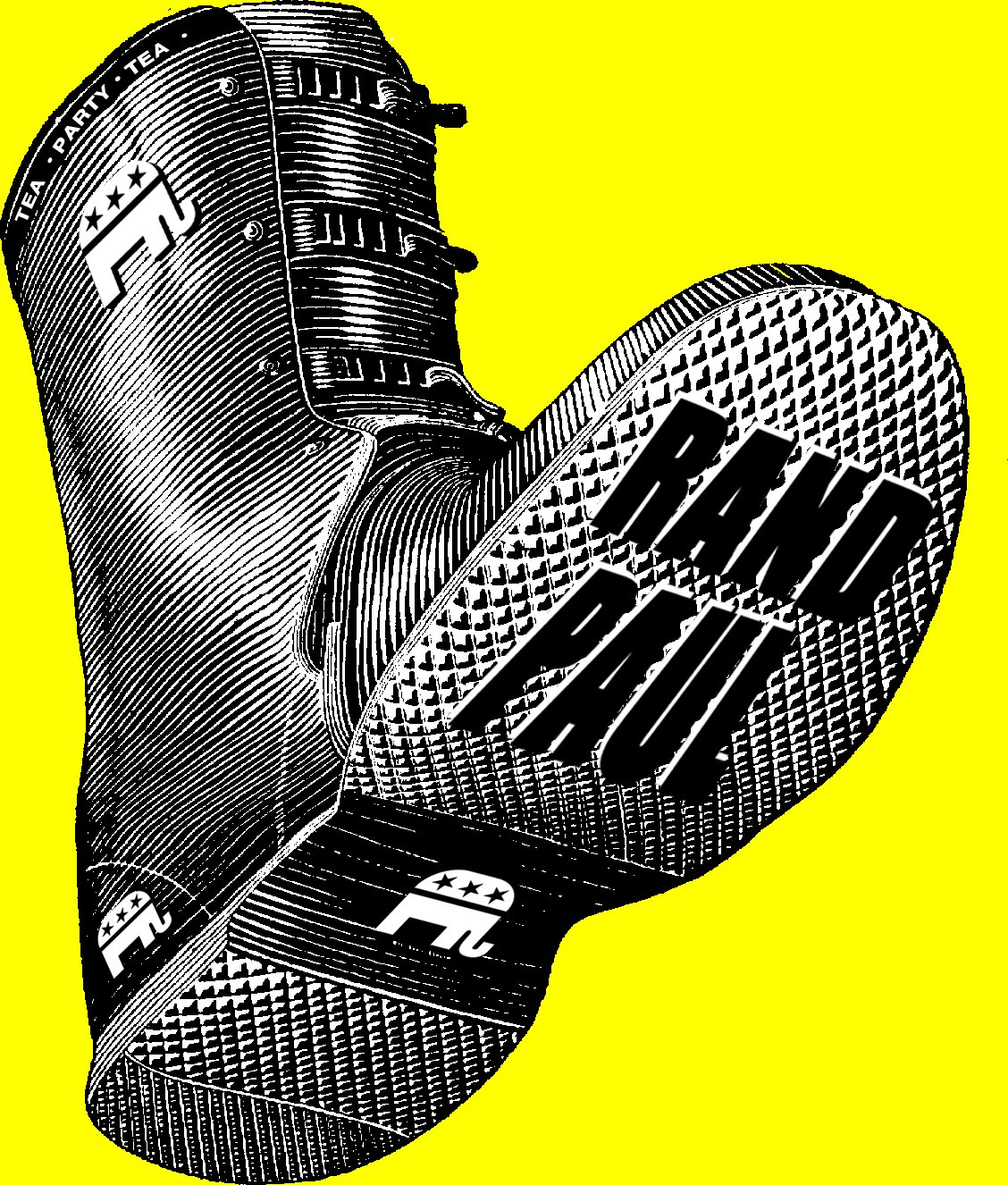
Tea Party Redux: Thoughts and Responses

George Shulman
   New York University


Thought #1: In response to Bill Connolly’s idea of distinguishing the “extreme” from the “radical” right, I wonder whether we should think about the “tea party” as a real social movement (TPM), perhaps on the model Lawrence Goodwyn described years ago in his history of the “genuine” populist movement, or perhaps in comparison to the CIO or Civil Rights Movement. (How is it different to talk about a resonance machine or a social movement?) The TPM has been engendered both by post-fordist capitalism, which has created for some few a material basis for a revivified entrepeneurialism or family capitalism, but also put this new sector at risk, and the TPM has been engendered by a cultural sense of displacement among whites, anchored in post-65 immigration and multi-culturalism. In the phrasing of C.Wright Mills, the TPM links “private grievance” to “public causes” in a way that mobilizes people to form what he called publics. In its anti-immigrant and anti-statist politics, it demonstrates a sense of crisis and urgency about national decline, fury at unwelcome change, and ferocity towards those it deems adversaries. It has an infrastructure (for the populists, traveling lecturers, for the tea party, talk radio and fox) that enables communication among de-centralized grassroots associations. Among its participants affect and creed are intertwined in both inconsistent and protean ways that include sharp disagreements. And lastly, there is a tense relationship of hostility and dependence between grassroots and the republican party and elected officials, even at the state level. What the idea of social movement may NOT reach, that resonance machine does, is the conjoining of very different ideological elements: as Connolly says, the right’s resonance machine is an assemblage relating secular free-market libertarians, corporate elites, and evangelicals. But his description of the “radical” right (the republican party elite, its funders, and corporate base) and the “extreme” right seems closer to the tension typical of social movement politics. (Patchen Markell’s association with Crespino on the white citizen’s councils is very suggestive in this regard while emphasizing the issue of race.) Republican elites gain legitimacy for their project from the ‘extreme’ voices, which do powerful ideological work against any form of state welfare and regulation, but elected elites are now also really afraid of the TPM, because it is willing to defeat incumbent republicans in primaries, and because it seems willing to create financial crisis, to refuse elite notions of responsibility.
Thought #2: To see the TPM as simply individualistic may be mistaken, not only because members articulate ideas of responsibility to family and community, but also because they are enacting the action-in-concert of the political. Maybe the TPM needs to be seen on the model of the “producer” ethos and politics in which a self-declared “productive” class identifies itself against “unproductive” classes above and below it. They speak an intensely exclusionary language as taxpayers (and so as the employed) against surplus or parasitic people unjustifiably supported by liberal elites. 
Their language thus combines race and class to create equivalence among illegal immigrants, poor people and prisoners. They do not challenge but endorse the logic of the market and neo-liberal rationality, and they replenish rather than question the worst of nationalism. Unlike the CIO or the CRM, they focus on the wrong target -the state- not the multi-national economic order and its bio-political disciplines and quarantines. Moreover, they have no vision of the future except as a return to an idealized past, whereas the CIO and the CRM wanted to create an alternative to both past and present. But are we mis-reading the TPM in any way? They do not avow properly “democratic” commitments in the progressive form the left reifies, they interpret equality in libertarian rather than social democratic ways, and so they oppose the extensive state regulation the left endorses, but is the “socialism” they attack in any way related to the corporate state, that we attack, the protection racket that binds political and economic elites? Are there voices among them who reject “corporate welfare” as well as the military-industrial complex or imperial state power? Can their commitment to de-centralization be affirmed in any sense? Can we challenge them to make good on that language more consistently? Is there a sense in which they are democratic not merely liberal individualistic? Is it a delusion to put them in Wolinian terms, to see them as enacting “demotic” power, even if we disagree with them over substantive positions? Is it crazy to ask if there are any strands of affiliation between them and a democratic anti-statist left? 
Thought #3: Paul Krugman says the real issue in American politics is not a lack of civility or the violence of rhetoric by the TPM, but profound substantive disagreements about the state and the market, foreign policy etc. But maybe Krugman is wrong, at least in one regard. For recent polling data suggests that a majority of Americans want the specific policies supported by the left - item by item, in the concrete- but remain opposed to “big government.” They are living that contradiction Marx called a double life. Perhaps, then, what Krugman depicts as a substantive or ideological division applies only to minorities on left and right, while the remaining 60% of the electorate is composed of people who are divided internally as it were, between something like a common sense understanding of their interests, which require state action, and the ‘common sense’ or ideology/fantasy of individualism and its anti-statist phobia.. The democrats have refused to make a strong narrative case to support state actions, therefore, to avoid offending that deep fantasy, and instead they focus on prosaic policy, case by case. But they lose when republican poetry (by the extreme or the radical right) stokes fear of state power. How is the investment in individualism, and the corresponding hysteria about the state, best addressed? It seems to me this is the central rhetorical and political question, and one democrats must address rather than avoid, though addressing it is also risky because it may alienate the “independents” they require.
Thought #4: Does the violent speech of the TPM require us to rethink ideas of an“agonal” politics? I am inclined to defend violent speech, maybe because of a misplaced attachment to memories of my own 60's radicalism -we were uncivil, and self-righteously used violent and demonizing speech. (And yes, we alienated a majority of the population.) In a culture that longs for the non-partisanship of more perfect union, or that seeks to avoid politics through juridical forms, shouldn’t theorists defend agonism, not only as the grounds for advancing a substantive democratic/left agenda, but also as a democratic/political idea(l) in itself? Is the political task now to contain “extreme” voices on the right by invoking norms of civility, or is the task to make a more vigorous left to contest the right? I want to say: make a left rather than look to umpires (the media, or Obama) to promote an ethos of critical generosity. But given the absence of a left, and given the ferocity of the right, maybe the emphasis on ethos is the only/best way to protect the interests and constituencies we care about? Maybe also a language of constitutionalism, and so a deliberative ethos, is needed to draw independents away from the right’s gravitational field? 
Thought #5: If only we could see our moment now, looking back from the future. Are we living in some version of 1850's America, when southern ‘fire-eaters,’ defining themselves as victims, are impossible to placate by any compromise, and use their sense of victimization to justify incredible personal and political aggression? As these folks depicted themselves as desperately trying to preserve an endangered way of life, are we like abolitionists (and Obama like Lincoln) in contrasting efforts to forge a response? What was needful or possible then, and what is needful and possible now? Are we living in some version of Weimar in 1930, the rhetorical violence heating up while a right-wing movement forms under the umbrella of liberal protections it uses and abuses (and abandons the second it gains formal power)? Does the left therefore need to recognize its dependence on a constitutional order whose limitations we have devotedly exposed the last thirty years? I don’t mean these are literally analogous moments, but can we get a broader view of our moment, our present, to help us decide what is needful? 
In sum, I find myself confounded by the TPM. I am happy to attack their idealization of “the individual,” of the market, of the past, and of the nation, but I am averse to attacking the violence in their rhetoric, their critique of the state and defense of decentralization, and their urgent sense of a whole “system” broken. And then I wonder if, in some fealty to agonism, I am defending people who are the American face on brown shirts, enemies (not merely adversaries) who would kill me in a second. Is my attachment to agonism -and critical generosity- blinding me to the real meaning of the TPM? In the face of an “extreme” politics endlessly replenished by victimology, and defended in the name of free speech and agonal contest, what is to be done?

Monday, January 24, 2011

The Geopolitics of Motherhood

Alex Barder
Johns Hopkins University

Amy Chua, professor of law at Yale University, recently published a controversial essay in the Wall Street Journal entitled “Why Chinese Mothers are Superior.” This essay is essentially an excerpt of larger book entitled Battle Hymn of the Tiger Mother recently published by Penguin Press. The object of her essay is to provide an explanation for why Chinese students are “stereotypically successful.” Chua argues that the Chinese mother child relationship is one defined by an overwhelmingly strict regime of rules and expectations coupled with ample forms of humiliating criticism when those rules are broken or when expectations are not met.
Pretty much everything that kids today take for granted, from watching TV to playing computer games and even (interestingly enough) acting in a school play, is verboten under this regime. Instead, classical music, math and science are, unsurprisingly, privileged. Chua ultimately argues that this form of parenting works best to induce a measure of self-respect through excellence. Indeed, throughout the article, Chua makes no effort to disguise her own disdain for “Western” concerns with the child’s psyche and self-esteem which leads to indolence and weakness. Her argument has naturally provoked a wide variety of responses, from horror at what is perceived as abusive child-rearing to outright approval. Others have righty criticized Chua’s untenable binaries between Western and Chinese mothers and their values, or whether all or even most of Chinese mothers raise their children as she does.
Whether or not the so-called ‘Chinese/Chua mother’ approach is the necessary one to raise successful children is obviously open to question; and I have my own serious doubts about its assumptions and arguments. But what makes this article particularly interesting is that it comes at a time when there is a rising fear of decline in the US imperial position in the world, especially with respect to China. Chua’s article on pedagogy resonates between familial insecurity about the future, the shattering of the American dream for the vast majority of Americans in the aftermath of the great recession and ultimately about the endurance of American’s political and economic global hegemony. Only, as far I have read, has Judith Warner in a New York Times review inchoately made this point in addressing Chua’s book.
To be sure, the relationship between imperial governance and pedagogy is by no means farfetched. One can go back to Tacitus’ Germania for a critique of decadent and effeminate Roman values and moral education compared with the ‘vigorous’ Germanic youths: of course, this at a time when the Roman Imperium was in its ascendancy in the year 96. But, more recently at least, pedagogy and parenting was of the utmost concern among imperial administrators in the 19th and early 20th centuries. Ann Stoler, for example, has done most to show that “The management of sexuality, parenting, and morality was at the heart of the late imperial project” such that “In the nineteenth century Indies cultivation of a European was affirmed in proliferating discourses on pedagogy, parenting, and servants - microsites in which bourgeois identity was rooted in notions of European civility, in which designations of racial membership were subject to gendered appraisals, and in which ‘character,’ ‘good breeding,’ dispassionate reason, and proper rearing were part of the changing cultural and epistemic index of race” (Carnal Knowledge and Imperial Power, 110, 144). Fear of miscegenation and the influence of local servants on children raised in the colonies were fundamental topics of concerns for colonial administrators who believed that only through a restrictive moral, educational and psychological pedagogy can European self-identity and its imperial project be maintained.
Of course the issue today differs from an overt 19th century imperial concern with race to one of renewed concern with the geopolitical and economic competitiveness of American Empire. It is not by chance that Chua’s article comes on the heels of proliferating news stories about China’s greater than expected military capabilities. A few months ago, for example, James Krask published an essay entitled “How the United States Lost the Naval War in 2015” in which he posits a scenario where the US navy no longer has supremacy of the East China Sea. Recent information on a new Chinese stealth fighter highlights China’s technological military prowess that potentially rivals the US air supremacy. 
On top of military hardware advances is the widespread perception of China’s economic and productive might, its accumulation of enormous dollar reserves and its ability to use its economic position to push its own agenda in various international fora. Whereas China has become the manufacturing giant of the global economy, the US is left with a bloated financial sector whose benefit is largely overstated.
More to the point, much of this concern with American decline is then refracted through a growing idea over the past few years that American public education is in crisis, especially in its failure to adequately train students in science and math. For example, the Programme for International Student Assessment ranks countries on the basis of math and science testing. Its 2009 result reveals that the top five countries for math and science are lead by China, followed by Singapore, Hong Kong, South Korea, Taiwan and Finland, Hong Kong, Singapore, Japan, respectively. The United States ranks 30th in math and 23rd in science. Thus in recent years there has been a growing call to privatize US education in the form of either vouchers for private schools or charter schools as a means of reinvigorating education by dismantling public sector teacher unions.
But Chua’s article it seems to me goes one step further in its explicit argument that culture remains a central aspect for addressing questions of education. Her essay is indeed firmly positioned in the culture war discourse (thus seamlessly appearing in the Wall Street Journal) by emphasizing a rigidly hierarchical family nucleus as the means for reasserting individual control at a time when American families feel a growing social and economic insecurity at home. This return to a concern with parenting, nonetheless, diverts us from the need to attend to the deleterious effects a neoliberal political economy has produced for over thirty years, with its generation of crises, neglect of the infrastructure of consumption, reckless disregard for the environment, production of extreme inequality, disregard for public education and commitment to authoritarianism within organizational life.

Thursday, January 13, 2011

The Radical Right, The Extreme Right and The Republican Party


William E. Connolly
Johns Hopkins University


We have heard a lot lately, on the moderate media, about how it is time for leaders of the Republican Party to step forward, to exhibit enough courage to repudiate the extremism of the Tea Party, the language of violence peddled by Sarah Palin, Michel Bachmann, Sharron Angle and others, and the charges of Fascism and Socialism made against Barack Obama by Glen Beck and Rush Limbaugh. 
The Republican leaders, they say, need to marshall “the courage” to call the extremists out. It is time to stop being “intimidated.” This language has emerged once again in the wake of the Arizona killings, and it is typically joined to ridiculous statements that both the Left and Right need to “tone down their rhetoric.” But there is a significant difference between radical rhetoric on the left or right and the extreme rhetoric of violence on the Right. This distinction is too often lost on those moderates who do not themselves speak out clearly enough against the language of violence. 
My concern today, however, is not with moderates (See Militant Pluralism and Exclusionary Extremism). It is with Republican Party leaders who refuse to oppose firmly the violent rhetoric of the extreme Right. Is it because, as moderates say, they lack courage? Or because, at some level, they identify and are protected by these same extremists? Sure, a few Republican leaders may lack courage, but it seems that a lot more are silent because their own radical fantasies of market purism, a small state, the absolute freedom to bear arms, and the reduction of “entitlement” programs is protected and buffered by the extreme Right. The extreme Right, in looking for a final battle to defeat the left and the middle, allows them to sound moderate. The extreme Right also provides the mobilization machine the radical Right solicits and needs.
The real situation is thus more disturbing and dangerous than moderates admit. A majority of Republican activists and leaders, joined by a large section of Republican Party followers, is attracted to the extreme ethos of the Tea Party, Limbaugh, Palin, Beck, Bachmann and the gang. Only they are too cautious to admit it directly because they fear that straight out admission would weaken them with Independents. That is a better explanation of the selective statements and silences in and around the Party since the election of Barack Obama. 
That is why the leaders are either silent when a political killing occurs, or explain away any connection between that killing and the violent rhetoric of the extreme right, or introduce a crude equivalence between the dissident left and the extreme right, even without identifying cases in which the first group deploys the language of violence or is involved in violence. 


For Examples of the Right's Violent Demonization of Liberals
These Videos Were Circulated Before the 2010 Midterms Under the Title
"America Rising" 
That is why they equate Sean Hannity with Keith Olbermann. That is why most celebrate an ever loosening of gun control laws; that is why they act as if “entitlement” programs are socialistic; that is why they campaign militantly against financial and corporate regulation in the name of a pure market that has never existed anywhere; that is why they speak in the name of a single, bellicose God for all Americans rather than a society of deep pluralism; that is why they resist unemployment insurance for the lower middle class; and that is why they push the filibuster envelope to the most extreme degree in the history of the country. 
Did you check out that recent Republican gathering when the leaders competed with each other to demonstrate who owns the most guns? What Republican leaders, today, call for gun control, even while they are happy to locate total responsibility for violence on a deranged individual who had ready access to a weapon with multiple clips capable of firing thirty shots at a clip?
So, we must distinguish between the radical Right and the extreme Right, while keeping alert to subterranean links between them. When the radical Right celebrates “the individual,” it also celebrates a predatory, unregulated market that places the lower and middle classes in a squeeze, promotes even more inequality, and periodically places the country and the world at the risk of collapse. 
At least four members of the Supreme Court are members of this radical Republican gang, too. They love to think of economic corporations as “persons,” while reducing the rights and protections available to regular people. They call themselves constitutional “originalists”–-only committed to following what the founders “intended”--while creatively reading the second and fourteenth amendments to support a world with more guns and more corporate power. 
They are “against judicial activism,” but ever so active in supporting the agenda of the radical Right and giving the extreme Right the armaments they seek. Several will vote against the mandatory provision in the recent health care legislation, but not because the constitution makes it necessary to do so. They will do so because they already support a radical version (or fantasy) of a minimally regulated market, without ever coming to terms with how minimally regulated markets generates crises over and over. 
The extreme right provides ideological cover for the radical, corporate, pure market, assault weapon supporting Right. with its eager embrace of state-corporate entanglements whenever it produces dividends for the rich. The radical right does not want to be touched by the dirty hands of the extreme right. But they don’t want to restrain or civilize it either. This is not because of a lack of courage. But because of a lack of integrity and care for the health and safety of a vast majority of the population.
It is time to stop talking about the need to generate courage among moderate Republicans. It is time, rather, for the moderate media to find the courage to define things as they are, even as the truth will bring down the wrath of the radical and extreme Right together. What is that truth? The radical Right of the Republican Party has fallen into an illicit love affair with the extreme Right attached to the same Party. Otherwise they would support significant gun control instead of handing weapons to the very same people they call “deranged individuals” once a killing occurs. They would also support effective programs for mental health in America, instead of leaving that issue “to the market.”

LinkWithin

Related Posts Plugin for WordPress, Blogger...