Showing posts with label Ecology. Show all posts

Wednesday, September 8, 2010

Fragile

Timothy Morton
   U.C. Davis

Where, if not from the Impressionists, do we get those wonderful brown fogs that come creeping down our streets, blurring the gas-lamps and changing the houses into monstrous shadows? To whom, if not to them and their master, do we owe the lovely silver mists that brood over our river, and turn to faint forms of fading grace curved bridge and swaying barge? The extraordinary change that has taken place in the climate of London during the last ten years is entirely due to a particular school of Art.
Oscar Wilde, “The Decay of Lying” 
***
  Art (verbal, visual, musical …), I think you will agree, comes from the future. That is, art contains hitherto unspeakable and unthought reserves of utopian energy. That's precisely why we keep studying it. No one reading exhausts the meanings of a story. Sure you read Jane Austen to find out about how men and women related in the past. But you also read her (go on, admit it) because she might be predictive of the future. I'm really rather disappointed with myself for having to repeat this hackneyed common knowledge, but there you go, it's my topic here. 
   Think about all those movies that were strangely predictive of 9/11. It was as if we were dreaming about it before it happened. Now back in the early 1970s the rock band Yes commissioned the painter Roger Dean to paint several of their album covers. One album, Fragile, depicts something like Earthrise: an Earth-like planet seen from space, a blue ball. Whole slices and chunks of this planet are separating from the main body.
   The Fragile cover was the first in a series that depicted a story not told in the lyrics, not until his solo album Olias of Sunhillow narrated it: a whole planet threatened with collapse, the flight to new worlds, galleons of refugees floating through space.
Then a chunk of Greenland broke off. The chunk, part of the Petermann glacier, is four times the size of Manhattan. Weirdly, it even looks like Manhattan.
NASA MODIS-Aqua satellite image 

Nature copies art, unfortunately 
   Another hyperobject to add to our collection. The momentum of the glacier is such that it can't be stopped (see my previous post on the difference between momentum and velocity). That means that if any oilrigs are in the way … you do the math.
     How strange that utopian prog rock and utopian eco-cinema visualized this moment before it happened. Like I say, poetry comes from the future. In a horrifying twist of Oscar Wilde's coy logic about nature imitating art, human “art” in its broadest sense (the sense that includes fossil fuels), may well have wrought this change in “nature.”
     My point stands even if global warming isn't directly responsible. We have built the frame in which such things loom into view. Our arts beam painful, unspeakable realities down from the future. Hopefully we can inspect and analyze them before they truly materialize. I wonder whether this argument will fly next time a humanist applies for funding …
     Here at the Contemporary Condition, William Connolly has a wonderful new post on fragility. The more we know, the more we realize how fragile we are and how fragile our world is. I've argued elsewhere that
fragility is what it means to be an entity in this Universe.
Earth and Moon from MESSENGER
     What a good place to start rethinking ethics and politics. I don't for a second buy into the story, promoted both by deep greens and by the right, that Mother Earth will just brush us off and recover. Faith in an all-powerful deity is precisely a way to ignore hyperobjects. Some people commented on my previous post on hyperobjects, wondering whether God could be considered as one. No. It is precisely when we start to notice hyperobjects that the idea of some transcendental beyond, inhabited by an all-powerful being, starts to melt, and we humans break loose from our island of certainty to float on the ocean of science.
How arrogant of us to think that we had reached the end of history in 1989. And how brittle of us. Little did we want to know how this posturing was actually a symptom of our own fragility. The good news is that we are at the beginning of history, like an exhausted newborn, stunned and breathing heavily outside the womb of concepts such as Nature and Progress. 

Monday, August 16, 2010

The Fragility of Things


William E. Connolly
Johns Hopkins University

We inhabit a time when things have become more fragile and urgently in need of delicate tending. At the same time, a large section of the populace is belligerently opposed to recognition of this condition. It is a time when militant pressure to engage the fragility of things must be joined to acknowledgment of the limited ability of the human estate to master the world. It is thus a paradoxical time.
What are some sources of the refusal to recognize this feature of the contemporary condition? First, some popular versions of the three monotheisms militate against it, acting as if God will take care of us no matter what we do to the rest of the world and, in the worst cases, defining those who bring such news to be enemies of God. Second, neoliberal ideology does so too, with its henchmen on the media acting as if markets can allocate prices, production, worklife, and consumption in a rational way without significant regulation. Third, the time scale and corporate dependence of the media does so, as it spins out scandals and neoliberal fantasies. Fourth, the divisions and methods of the human sciences make a contribution, so that the fragility of things too often gets lost in the gaps between them. Fifth, the sharp boundaries between the social sciences, humanities, and natural sciences do so, diverting our attention from numerous interactions between the human estate and non-human systems with their own powers of self organization. Fifth, intense desires by several constituencies to believe that things will take care of themselves so as long as we pray and support corporate/market hegemony over the culture folds into this mix, fueling support for churches, media talking heads, political leaders and popular writers. There are numerous voices who fight against these trends, including by way of a sample Stuart Kauffman in biology, Catherine Keller in theology and biblical studies, Rachel Maddow on MSNBC, Timothy Morton, Brian Massumi and Steven Shaviro in English and media studies, John Buell and Mark Blyth in political economy, and Jane Bennett in political theory. They remain voices in a larger wilderness to date, but the cumulative potential of their work should not be underestimated.
The disparate pressures listed above screen too much of public culture from fragilities that penetrate numerous aspects of life. The dangers and uncertainties are too much for many to face; the risks to future generations too abstract to be internalized; the changes that are needed in the American way of life too severe to be admitted. To change this situation would require concerted change in several of the above domains, with each adding energy to the others in a series of positive loops. As a few take off, they might spur other movements in churches, universities, investment communities, consumer groups, states, and the media to revise established private and public priorities.
What, then, are some of the fragilities created by conjunctions between unfettered capitalism and several non-human systems? One instance resides in the failure to turn to renewable energy resources that many started pressing for in the early nineteen seventies. Now late capitalism is compelled to drill oil in ever more treacherous zones, triggering destructive eco-events that careen out of control. The 2010 BP disaster in the Gulf, for instance, was triggered by the explosion of a gas bubble that surprised the engineers, overwhelmed available safety devices, and outstripped the capacity of the company to repair. The complex interfaces between oil, water, wetlands, species life, and human welfare are not readily susceptible to human control after the fact because each of these systems has some degree of autonomy and because they all interact. There are at least 3500 other wells in the Gulf tapped temporarily without being supervised closely by corporations or the state. The response this event generated was revealing: many demanded a rapid state resolution of the problem joined to an immediate return to drilling under the same old rules.
The fragility, too, resides in the perverse relation between the terms of capitalist expansion and the acceleration of climate change, with implications for world temperature increases, the decline of fertile soil, the loss of habitable zones, and a possible diversion of the Gulf stream that could trigger a new ice age in Europe. Each of these implicated systems, by the way, has its own mode of self-maintenance and fragility. The fragility resides as well in regional economic inequalities, exacerbated by regional religious differences and the differential effects of climate change on soil and habitation in vulnerable zones, finding variable expression in massive migrations, imperial pressures, terrorist movements and regional religious resentments. It finds expression, too, in the shrillness adopted by media defenders of neoliberalism, amply primed by tea bag anger. It resides in the more rapid border crossings of people, arms, drugs, ideas, music and goods that challenge the terms of territorial order upon which neoliberal state capitalism rests as it also generates bellicose drives to reinstate those borders. It resides even in the complex loops between bees, viruses, and pesticides that derange the brains of bees, leading to rapid decline in bee population and decline in the pollination of crops and fruits. It resides, too, in intensified efforts to manage and control the populace as the distributive effects of these fragilities pile up.
Such a list constitutes a mere sample of fragilities stalking the human estate. And it must be emphasized again how each of the processes listed in subordinate clauses of the above sentences constitutes a force-field of its own, with a degree of autonomy and some capacity to morph under new conditions of stress.
I have written elsewhere about how the evangelical-capitalist resonance machine supports a public culture of vigilante blindness. Today it is necessary to focus on how the human sciences--at odds with this machine in several ways--nonetheless contribute to this condition. In general, the social sciences are either too enclosed upon some aspect of human culture or, if and when they attend to human/non-human interfaces, predisposed to underplay how nonhuman systems have self-regulating powers of their own, interact with other such non-human systems, and periodically reach tipping points that recoil back on the human estate. 
Such tendencies are loosely connected to another disposition, itself connected to the desire to construct several self-enclosed sciences. Inattention in the first respect often leads to a tendency to underplay the contribution that the quality of role performances in every aspect of cultural, economic and political life makes to both the tonalities of public culture and sensitivity to human/nonhuman interfaces. Paul Krugman, for instance, is one of the few journalists who takes on neoliberal capitalism on a regular basis, and he folds ecological awareness into his economic analysis. Much to admire there. But in a recent piece on the economics of ecology in the New York Times Sunday Magazine he underplays the powers of self-maintenance and self-adjustment in non-human systems and fails to come to terms with the contribution that the quality of ethos makes to every aspect of economic life.
The contemporary fragility of things can now be stated in stark terms: As neoliberal capitalism expands, as it assumes hegemony over more aspects of life, as it fosters visible inequality between regions, and as it supports rapid growth in the world’s population, particularly in areas that are ecologically challenged, its intersections with a large number of self-regulating, non-human systems become more strained and precarious. As those force-fields recoil back on it, the fragility of things becomes accentuated and more visible to those with eyes to see. 
The answer is not to turn to a classical model of socialist productivism, nor to the themes of deep ecology with its assumption that nature tends towards a stable equilibrium. The first continues the growth imperative by new means; the second underplays the extent to which a variety of interacting fields contain independent powers to morph in this way or that. Fred Pearce, in With Speed and Violence, provides a powerful review of both slow and rapid periods of climate change over the last 100,000 years, with several instances triggered by a volatile intersection with other, non-human force fields. Only during the last 200 years has the human estate had such profound effects on these other systems. The Pearce study thus cuts between those who say that climate change is only “natural” and those who say it is determined by humans. It is both, today at least, which makes the contemporary fragility of things more severe than it would otherwise be.
If socialist productivism and deep ecology are both deficient and neoliberal capitalism is the worst of all, what is the answer? I do not have a perfect recipe, only possible directions to pursue. Today we must amplify cultural recognition of the limited power of the human estate in its close interactions with a world composed of innumerable force-fields with volatilities and pluripotentialities of their own. Such recognition must then be folded into production priorities, consumer choices, market regulations, investment decisions, church activities, generational relations, university education, high school courses, media reporting, state policies, and international organizations. That such a shift in operational priorities could make a real difference is supported by the fact that contemporary American capitalism would be quite different today if economic and cultural institutions were not so infused with the hubris and existential resentment that propels the evangelical-capitalist resonance machine. It will take a strange combination of political militance and ecological sensitivity to move in the needed direction. And success in this respect will only provide a start...
Let’s return, then, to the positive role for the human sciences in this larger scenario. Today to participate wisely in the human sciences we must also select some non-human systems to study in relation to the human estate. That in turn means reform of the professionalization and coarse methods that govern too much work in these sciences. The task is to cultivate new sensitivities to human/nonhuman imbrications in ways that draw the humanities and the human sciences closer together. For much work in the humanities focuses on how to enlarge human sensitivity in a culture that otherwise often works against it. As we come to appreciate the differential powers of self-regulation and potentialities to morph in a variety of non-human systems, we will acquire the existential modesty, political courage and ecological sensitivity to cope wisely with the fragility of things. That is one needed interface, then. But the new fragility of things also means that the human sciences must become more attuned to complexity theory as it unfolds in several natural sciences, incorporating some aspects of it into our own portfolios. The most profound versions of complexity theory discern what might be called degrees of cultural complexity ranging beyond the human estate. These sciences in the domains of biology, ecology, neuroscience, geology and climatology both speak to cultural theory and need infusions from it. A close exploration of the potential intersections between the human and non-human sciences must await a future post. But the larger point is that contemporary fragility of things means that the human sciences must alter their traditional sense of what it means to be “between” the humanities and the natural sciences. That word must now shift from its sense as the declaration of a boundary to its other sense of pointing to a space of movement and crossing that links different processes.
To attend to the fragility of things today is to fold literary and artistic sensibilities into the human sciences as you also attend to complexity theory in the natural sciences. Such crossings will improve the quality of the human sciences, as they help us to focus on a defining characteristic of the contemporary condition. It will not be easy to negotiate such a plurality of interfaces, given the professional grooves into which each science has settled and administrative pressures within universities to make the human sciences conform to the demands of neoliberal capitalism. But the effort is worth it: a degree of success could spur broader recognition of the fragility of things and new efforts to address this condition. For, as the list at the outset of this piece suggests, resistance to acknowledgment of the fragility of things comes from several, intercoded sources.

Monday, August 9, 2010

Don't Get Mad, Get Political: The Deepwater Horizon Oil Spill and Corporate Incorrigibility


Jake Greear
Johns Hopkins University

After more than three months the oil from the Deepwater Horizon spill appears to have finally stopped flowing, but not before the gusher became one of the worst environmental disasters in U.S. history. This protracted disaster has left an ocean of dispersed oil in the Gulf of Mexico and a haze of outrage, fear, suspicion, helplessness, and uncertainty hanging in the North American air. People naturally want someone to blame, and media figures have been happy to oblige, alternately heaping scorn on Mr. Hayward, BP, President Obama, “the administration,” and occasionally Haliburton. No doubt there is enough blame to go around, but I am afraid that by concentrating on specific figures or specific instances of incompetence and negligence we are missing the point. 
The spill shows that we have a problem, but the solution is not more competent, less selfish, or less neglectful people at the helms of corporations and governments. We do not need a more truly repentant Tony Hayward or a more righteously angry president. What we need is to institute more vigilant and robust democratic control over extractive industries. 
Debates like the one ignited by this spill tend to polarize into two positions. Some lash out at the big, greedy corporations, which they see as composed of callous white collar criminals. Others see corporations as groups of regular people just like you and me who are just trying to earn a living doing the heroic work that brings us the goods. It seems to me that both positions make the mistake of anthropomorphizing corporations―attributing guilt, redemption, patriotism, compassion, or betrayal to them. But corporations are not people, nor are they even the simple sum of the people composing them. They are organizations that powerfully mobilize certain human desires―the desire for wealth, the desire for cheap goods, or the desire to apply one's abilities as part of a team to solve interesting problems―while they demobilize other desires and motivations―such as love of place, the desire to pass on a way of life to the next generation, pride in one's work as a participation in the world, or the desire to work toward the public good as a member of a larger community. 

Many activists would be surprised to find out that some of the people running these corporations are fairly nice and thoughtful people. But even if the people working for corporations are decent human beings, the logic that mobilizes corporate commercial activity will always be ethically narrow, economically short-sighted, and ecologically blind. To expect a corporation to act as a good neighbor or a good citizen is as nonsensical as it is to admonish one for “greed” or ecological exploitation.
Extractive industries like coal and oil production provide only the most obvious illustrations of this point. Even putting aside the dangers of fossil fuel consumption at the planetary scale, oil and coal companies particularly have an inherent tendency to ecological violence. This very visible crisis has been a good reminder of this fact. Looking for a “bad” company to boycott or a “bad” CEO to run out on a rail feels good, but it is self-defeating. Tony Hayward's ouster accomplishes less than nothing. After all, what would a “good” CEO look like? A good CEO would pursue the shareholders interests selflessly, competently, boldly, and energetically, and try to build a strong company and provide a good product to the customer. A good CEO will take chances, seek forgiveness over permission, and find inventive ways to bend the rules. In other words, a good CEO is often the worst thing that could happen to the communities that have the misfortune of living near coal or oil reserves. 
The executives at BP who chose to drill under a mile of ocean knowing a mistake could devastate an entire region are nothing if not true to form. Of course other oil companies are no different. If allowed, none will hesitate to treat whole regions and the lives they support as expendable. BP certainly must be held fully accountable for this particular catastrophe. And it is important to hit them where it hurts―i.e. in the pocketbook. But we should save our anger for our own political failings. As relatively un-oppressed citizens living amid the activities of an advanced industrial economy it is our duty to protect ourselves, the places we call home, and the ecosystems that sustain us from the inherent excesses of corporate activity, and on the whole we are not doing it. The lesson of the Deepwater Horizon spill is that we have to pull our heads out of the trough long enough to take note of the increasingly outlandish and dangerous “private” economic activities going on around us. We must abandon the assumption that some technician, expert, or bureaucrat somewhere has things under control. Unless a day comes when we can get by without the jobs, goods, and wealth corporations create, we cannot shirk our political responsibility to keep them in check.
Unfortunately there are many nation-states that lack the political institutional stability and efficacy to enforce such oversight. Communities are falling victim to ecological violence for this very reason all around the world. However, in spite of the imperfections of the United States as a democracy, in this country we really have no such excuse. Here we suffer primarily from a cynical pseudo-patriotic discourse spuriously linking corporate entitlement to individual liberty. To corporations this shameful myth is a giant “KICK ME” sign on America's back. 
The legislation currently being pursued at the U.S. Congressional level is a small start. But the unpopular truth is that the enforcement of reasonable constraints on offshore oil drilling will mean that certain oil reserves will be simply off-limits because it is impossible or impractical to get at them safely. It has become painfully clear that those under a mile of ocean should be among the off-limits reserves. Rand Paul's recent statement is exactly right as far as it goes: “accidents happen.” Whatever series of violations may have led up to the spill, the spill itself was an accident, and it is impossible to eliminate the possibility of further accidents. 
My own experience in the construction industry leaves me deeply skeptical of the idea that our make-or-break regulations should deal in the minutia of, for example how the o-rings on blowout preventers are serviced. If regulation works at that level of high-tech specialization it seems to me inevitable that a “cozy” relationship will develop between the overseers and the overseen since no-one who has not worked intensively with such technology in situ has the expertise to adequately oversee it. Thus we end up having to trust the industries to regulate themselves―an experiment that has failed several times over. We do need standards for the machines and technologies involved, but the more important component of democratic oversight has to be common-sense rules, which educated citizens can understand and debate, that prevent the stakes of an error from getting too high. If a slip-up at work (whether by a worker, a machine, or even an inspector) means a whole region's way of life and means of living can be destroyed, the stakes are simply too high. Your work must immediately stop. If this is what a deep water drilling accident looks like―if what has transpired over the last three months is even a possible scenario―then deep-water drilling is simply not OK. 
It is true that if this disaster is confronted in a politically responsible way a few jobs stand to be lost, and already those who are out of work due to the temporary moratorium on deep-water drilling are crying foul. But if we must choose between a few jobs extracting the finite reserves of oil from under the Gulf and the many jobs harvesting the Gulf's renewable stocks of fish, then we must choose in favor of the latter. The jobs of the past, in this case, are the jobs of the future. 
Of course oil extraction in the Gulf is not going to stop altogether even if deep-water drilling is halted. And at this point it appears an apathetic public and a cowed leadership will simply tell the millions on the Gulf to take their hush money and wait on the next spill. BP congratulates itself for reportedly setting aside 20 billion U.S. dollars for paying out “legitimate claims.” What this means is that BP has offered to retroactively pay a price of its own choosing for something it long ago claimed: the prerogative to despoil a whole ecosystem. But do people not have the right NOT to put that prerogative up for sale in the first place? There are a lot of people on the Gulf Coast who are now fighting to defend this heretofore taken-for-granted right to basic ecological security. Here's hoping they somehow succeed. 

Tuesday, July 6, 2010

Is BP an Environmental Terrorist?

John Buell
Author of Evil Doers: Demonization and the End of Civil Debate in American Politics (NYU Press)

“Extremist Muslims” here and abroad are readily suspectedof violent acts, termed terrorists, and denied minimal rights. BP, however, istreated as a person entitled to full protection of the law. Even in the eventof an indictment, BP need not worry about the status of its Miranda rights orits ability to mount the best defense money can buy. Both Faisal Shazhad and BPshould be indicted and given fair trials, but crime and terrorism, like all centralpolitical concepts, have complex baggage, carry limits, and should start awider debate. Why are BP executives not designated as environmental terrorists?Corporate PR often brands nonviolent opponents of ecologically destructivemining, drilling, and forestry practices ecoterrorists. The term however,better fits BP’s behavior. Even had Shahzad succeeded in his plot, far fewer would have died than will perish from the Gulf oil eruption. Toxic fumes arealready disabling some clean up workers and over many years pollutants willtake many of our youngest or most vulnerable. 
 Since BP did not intend such a catastrophe, shouldn’t itbe exonerated? As Rand Paul says, accidents just happen. Nonetheless, becauseaccidents do happen, corporations are obligated to avoid riskiest sites, tomaintain all possible means of accident remediation, and to follow strictprecautions. This company knowingly violated vital regulations. It riskedcountless lives for the sake of economic power. It has a history of retaliationagainst internal whistleblowers. Even now it prohibits its temporary cleanupcrew from bringing their own respirators as protection from toxic fumes. Indefiance of an EPA request, BP spreads a dispersant banned in Europe. It majorgoal, says one environmental writer, is “to hide the body.” 
Despite a reckless past and inept and highhandedmanagement of the current crisis, the company continues to call the shots. Byspending a mere four percent of its profits on alternative energy BP rebrandeditself as a can-do corporate friend of both economic growth and the environment.
If BP were owned by the Taliban, however, its every pastdeed, ad, and utterance would be scrutinized and ridiculed. Religiously andoften ethnically different from the US mainstream Moslems here and abroad areoften automatically cast in one light. Some of our religious leaders chargethat Islam is fundamentally a violent religion. These extremist Christians havea language and rhetorical style that often resembles that of the radicalIslamists. Pat Robertson doesn’t speak for all US Christians, but his viewsalways command a hearing.
The sacred texts and sects of Islam, like those ofChristianity, include some violent rhetoric and violence- prone agendas, thoughthe bulk of both traditions condemns violence. Even Islam’s most rhetoricallyviolent sects, as with the Christian right, have varying targets and don’talways resort to violence. Nonetheless, those political and media figures thatare willing to acknowledge Islam’s divergent currents still often paint anyMuslim cleric who criticizes the US with the same brush. 
They “hate us for ourfreedom” and seek to destroy us, as President Bush says. Portraying those whooppose our policy even rhetorically as vicious and out to destroy our way oflife, itself a concept ill defined by Bush, may reassure us as to the worth ofour own values and policies and give us a sense of purpose. It does, however,play upon and reinforce an attitude toward US Arabs that long antedated 9/11.Bush I, Bush II, and Obama have all taken very different conflicts as anoccasion to present war as an opportunity to fashion and restore a proud,enduring identity that would match or exceed that of an idealized WWIIgeneration. Here is Obama’s take: “Now this generation faces a great test in the specter of terrorism. And unlike the Civil War or World War II, we can't count on a surrender ceremony to bring this journey to an end. Right now, in distant training camps and in crowded cities, there are people plotting to take American lives. That will be the case a year from now, five years from now, and -- in all probability -- 10 years from now.” Obama’s apparent pessimism is laced with a hidden sugar coating, thepromise of an enduring purpose, something many Americans now find lacking inturbulent times and for which they feel a desperate need.
Radical Islamists have not of course attacked Sweden wherecultural freedoms, especially for women, exceed our own. And just where, inwhat numbers or frequency, or why people are plotting to take American lives ishardly specified nor is evidence provided.
One careful study by the establishment- oriented RandCorporation, little discussed by the mainstream media, suggests that domesticterrorism is grossly exaggerated. Rand pointed out: “…since September 11, 2001…the problem, while serious, was wildly overblown. There have been… 46 incidentsof Americans or long-time U.S. residents being radicalized and attempting tocommit acts of terror (most failing woefully) since 9/11. Those incidentsinvolved… 125 people… about six cases of purported radicalization and terrorisma year…In comparison From January 1969 to April 1970 alone, the U.S. somehow managed to survive 4,330 bombings, 43 deaths, and $22 million of property damage. 
If the rate of such attacks does increase, does thisconstitute proof that Taliban or Osama is stirring up US Muslims? Our politicalleaders seldom contemplate the possibility that US citizen terrorists likeShazhad might have been disturbed by US drone attacks on Pakistani or Afghancivilians rather than inspired by Taliban leaders. Despite some press reportsabout Shazhad’s anger regarding drone attacks, Obama’s top counterterrorismadviser, John Brennan, brushed such reports aside and insisted the suspect was“captured by the murderous rhetoric of Al Qaeda and TTP that looks at the United States as an enemy.” 
Perhaps closer scrutiny of the suspect’s own words isn’tneeded if one doesn’t want to confront problematic aspects of our own idealsand actions.
Though BP has a full say in our media, we seldom hearMuslim extremists themselves. Even ordinary, nonpolitical Muslims who havecontributed to our safety hardly receive a mention. Salisbury reminds us of:“Alioune Niass, the Sengalese Muslim vendor who first spotted the… smokingSUV…If it were not for the Times of London, we would not even know of hispivotal role in the story. No mainstream American newspaper bothered tomention…Niass,…”
Documenting Niass’s role might blunt prevalent monolithicstereotypes of Muslims and also plant the notion that getting the cooperationof minority communities is more effective in curbing violence than generalizedsurveillance or racial profiling.
And when violence is wreaked on Muslims in this country,few mainstream media conclude that Americans are uniquely violent or daresuggest that Muslims too can be victims of terrorism. Pierre Tristam comments:“Few of you know that 10 days after the [incident] in Times Square, an actualterrorist attack took place in Jacksonville when a firebomb exploded outsidethe city's biggest mosque,… 60 worshippers were praying inside when the bombwent off… The bomber is still at large. The Jacksonville Times-Union [and otherlocal media] did an admirable job of covering the story... But… that terroristattack drew almost no attention from the national media… the terrorists-fromthe Oklahoma City bomber to the Fort Hood attacker to the Times Square bomberto, most likely, the Jacksonville bomber-are American. There's convenience increating a false sense of security by identifying Islam as the evil andAmericans as the good guys. But it's demonstrably not true.”
Quoting, or discussing the particular motives of extremistsects is especially suspect and often harshly attacked. The radical and oftenrhetorically violent social right generally escapes scrutiny—and certainlyfaces no prospect of assassination by the CIA-- because it is white andChristian and its goals and aspirations often are too close to the mainstreamfor comfort.
Discussion of the specific motives of radical Islamistgroups is off limits because it is taken as excusing terrorists. An oddposition, when we consider our justice system. In murder trials, part ofconfirming guilt lies in establishing motive. Showing the motive of a murdererhardly excuses the crime. Motives may partially exonerate, but they can alsosuggest how despicable some crimes are. In any case, if our goal is safetyrather than buttressing our own sense of righteousness, shouldn’t we want toknow as much as possible about the criminal? To combat BP and Taliban crimes,we need to understand both the cultures of predatory capitalism and variousradical religious sects both here and abroad. The concept of crime must beapplied as carefully to corporate actions as to those of extremist religioussects. The Left must avoid a double standard. If we are willing, as we shouldbe, to assess the motives and context of the Times Square bomber’s actions, wemust adopt the same breadth in our examination of other Manhattan reprobates.There is little to admire in Lloyd Blankfein or BP’s CEO, but both are part ofa corporate culture and worldview that idolizes wealth, has celebratedderegulation, disrespects government, regards fines for law violation as a costof doing business, and places a premium on immediate rewards. That cultureemerged amidst the crisis of liberalism a generation ago. Following the sharprun up in oil prices in the wake of the oil embargo and late seventiesstagflation, Republicans ran on a plank of economic deregulation and bashing ofgovernment. Many Democrats followed close behind. Not surprisingly bothregulation and regulators easily got a bad name.

More broadly, the sense of cheap oil as a right has becomebuilt into the culture and is part of the context in which BP operates. Oneformer oil executive is not far from the mark in suggesting that one reason BPoperates in deep water is that coastal residents abhor rigs but want the oil.Out of sight, out of mind. 
Reluctance to deem BP a criminal or terroristreflects a broad social dependence on cheap oil. It leads to unwillingness bylarge sectors of the public to acknowledge fully the multifaceted risks of oildependence. The US lags the world in its response to global climate change.Guardian columnist George Monbiot points out that as the consensus amongclimate scientists grows, public skepticism gains ground. 
Natural science isunlikely to control the outcome of this argument. Social and religious values,even core sense of identity, play at least as big a role as the naturalsciences. Consider environmentalists’ precautionary principle. Even if there isdispute as to the extent of man-made global warming, shouldn’t we err on theside of caution by reducing carbon emissions?
All of us, however, understand threats in terms of somefundamental set of core values. If one is convinced that free- market- drivengrowth can solve any problem, that government invariably screws up, and if onehas a core sense that he or she is a strong, self-reliant being, then taxes orregulation involve disproportionate risk. The cautious course is not tointervene. As economic or environmental tragedy unfolds, many may cling all themore to the socially and economically conventional course. The Exxon Valdezbrought us only double- hulled tankers to import even more oil safely.
Greenhouse gas proposals could hardly come at a moredifficult time. Working class Americans fear for their jobs, worry aboutimmigrants and rapid cultural change, and are angry about Washington policiesthat bail out bankers. The white working class has a sense that little has beendone for them for a generation. They rightly worry about who will bear thecosts of new environmental initiatives.
For much of mainstream culture, a quasi-religiousperspective is part of core attitudes on these issues. Following sociologistErnest Becker, Monbiot suggests: “the fear of death drives us to protectourselves with "vital lies" or "the armour of character".We defend ourselves from the ultimate terror by engaging in immortalityprojects, which boost our self-esteem and grant us meaning that extends beyonddeath. “
In the US, one popular immortality project has been abelief in a nature that can be fully understood in law-like terms andmanipulated through free markets to serve growing individual prosperity. Andboth as symbol and contributor to that faith the auto has played a pre-eminentrole, especially in a society that valorizes individual mobility.
This cultural and political background does not of courseexcuse BP of its responsibility to abide by accepted safety standards. Clearviolations of law should be punished, but if our desire is to reduce corporatecrime, we need to address the context in which both corporate and politicalterrorists or criminals regard themselves as above the law. In addition, weneed to articulate positive alternatives to the culture of growth ifenvironmentalists are to have much influence on a squeezed and insecure workingclass.
Today corporate crime and theoterrorism feed on each other. A rhetoric of international conspiracies undermining our freedomsstrengthens the Cold War era national security state. That state has alwaysfostered secretive dealings between government, the media, and supportivecorporations. Corporations and governments have economic and politicalinterests in pumping up the threat level. The atmosphere of imminentcatastrophe creates a context in which CEOs and even substantial portions ofthe population can see corporations and political leaders as independent of anydemocratic political check and entitled to special support. This support inturn reinforces their power. A rhetoric of free markets and deregulationdiscourages public or worker checks on corporate power-- though not substantialgovernment beneficence toward the most powerful corporate interests. A socialconservative evangelical discourse adds support to a black and white worldviewand demeans the most vulnerable citizens, often scapegoating them for economictroubles, thus sidelining economic reform. This self-reinforcing mix may makeus less safe. Though a minority even among Muslim radicals, theoterroristsreceive and enjoy disproportionate media focus on them. They use suchattention—and the excesses to which Western democratic governments go—as anoccasion to gain recruits.
How would Americans feel if a foreign power, even onecommitted to uprooting acknowledged evil, frequently—albeit “accidentally”--killed thousands of civilians through high tech assassinations? These are thequestions that a dogmatic faith in our own values, ways of life, and policiesoften excludes. If there is a way out, it may require a renewed emphasis ondecent jobs and social justice. We must also strive for more attentiveness tothe selective use of concepts of crime and terrorism. These foster and reflectracist and religious divisions that impede all reform efforts. We must alsochallenge our more is better mindset. Endless consumption may not be so much“human nature” as a process driven by corporate controlled information, statusanxieties fed by inegalitarian workplaces, long and involuntary working hoursfor those lucky enough to have full time jobs, and the product choices ofothers. All of these are immunized from critique and reinforced by acountermodel portraying a group of radical terrorists out to undermine ourfreedoms. At the philosophical level, we might contemplate the possibility thatnature itself is not designed to suit our purposes. Not only oil spills in deepand forbidding waters, but also volcanic eruptions and earthquakes may remindus that nature is not always fully predictable. But the nature that inflictssporadic tragedy also gives us the unexpected splendor, from rainbows to the emergence of life itself. If wecan reconcile ourselves to the possibility of untimely death and give ourselvesmore free time for interests and skills little developed, consider orreconsider what time with family and contemplation of our habitat brings us, wemay develop more capacity to enjoy a pluralizing society and a pluripotentialnature we need not conquer.


Monday, May 17, 2010

Flying Matters

David Howarth, University of Essex and Steven Griggs, De Montfort University, Leicester

Many of those who read this blog (we presume) will board a jetliner in the near future. Some will attend academic conferences, or visit friends and family. Others will commute to and from a place of work, or take a flight to spend a well-earned rest on holiday. Increasing numbers will be ‘leisure travellers’ heading for a weekend or short-break in a nearby city or holiday resort. How many of us will reflect on the environmental and social impacts of our actions in flying, and then act differently?

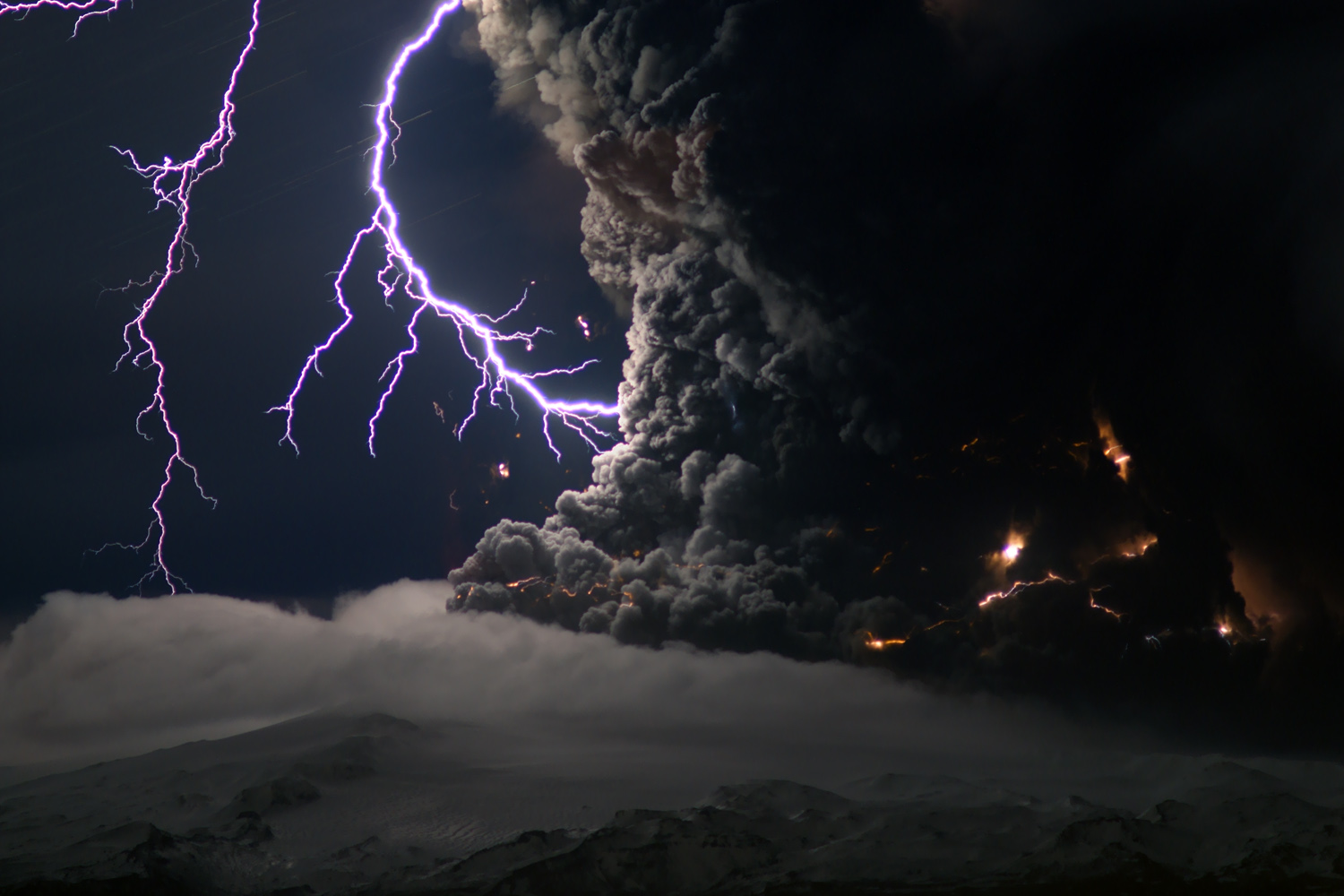
No doubt some of us will have agonised over the decision. We may have carbon offloaded our flight, or salved our conscience by finding solace in the limits of individual action to address climate change. We may even have worked through a complex set of mental calculations in which we determine that the flight would depart with or without us on board, and that for this particular journey there is no viable alternative to flying. (In recent weeks, we’ve also had to check that the cloud of volcanic gas from the eruption of the volcano Eyjafjallajökull is not preventing us from flying at all!) Anxieties about personal security have for many years been a growing threat at airports and for airlines. We might be tempted to swallow the latest ‘cake and eat it’ fantasy about the prospects of a ‘sustainable’ and ‘responsible’ form of aviation expansion.
Yet even those who agonize over the negative environmental impacts of air travel, or who abhor the endless queuing through security checks and customs, sooner or later find themselves buckling up their seat belts and putting up their trays ready for take-off. Such is the modern subject’s love affair with air travel - at least for those who are lucky enough to afford it.

THE DANGERS OF AVIATION

Reducing carbon emissions from commercial aviation is a challenge facing governments across the world. Consider the case of the United Kingdom. Its Committee on Climate Change has predicted that aviation’s contribution to UK greenhouse gases will rise from the current level of 6% to 25% by 2050. If 6% does not sound much, then it’s worth noting that aircraft pollution emitted at high altitude causes up to 2.5 to 4 times as much pollution as those emitted from cars on the ground.
Yet in the face of this threat the position of the UK government is riddled with contradictions. Despite vocal opposition from local residents, high-profile celebrities, environmental groups, direct action movements, and even government agencies, opposition parties, and members of the Cabinet, the Brown government gave its support in 2009 to the construction of a Third Runway at Heathrow airport. This followed its own 2008 Climate Change Act which committed the UK government to an 80 per cent reduction in carbon emissions by 2050.
Controversially, in December 2009 the Committee for Climate Change went as far as to suggest that a 60% growth in demand for air travel could be compatible with the Labour government’s commitment to keep CO2 emissions from commercial aviation in 2050 no higher than they were in 2005. This judgment was welcomed by some as a cap on New Labour’s ‘predict and provide’ ambitions to accommodate unlimited demand for aviation. But underlying the Committee’s assessment was acceptance of the aviation industry’s own ‘solution’ to the environmental impacts of flying: the ‘technological fix’. Indeed, the apparent mismatch between higher demand and lower emissions hangs on the reality of anticipated future fleet fuel efficiency, the use of alternative biofuels, and enhanced air traffic management, as well as other operational efficiencies.

A couple of weeks ago, these tensions were evident again in a high court ruling that declared that ministers should revise their rationale for the third runway as ‘it is now challenged by the government’s own global warming policies.’ (Guardian, 27 March 2010) The government met this judgment with repeated assertions of the need for a third runway to secure jobs and drive forward economic growth. Once again ministers have denied any contradiction between aviation expansion and measures to address climate change. Lord Adonis (the current Transport Secretary) said that ‘a new runway at Heathrow will help secure jobs and underpin economic growth … It is also entirely compatible with our carbon reduction target, as demonstrated by the recent report by the Committee on Climate Change.’ (Guardian, 27 March 2010)
A number of issues present themselves here. In the first place, the contradictory logic of aviation expansion is not external to the emergence of neoliberal forms of capital accumulation and governance in the UK, but a vital component of its reproduction and subjective grip. At the same time, global aviation is one of the major contributors to climate change, whilst the unregulated growth of airports and its transport needs, threatens local communities and their quality of life. The inevitable public consultations and deliberations initiated by governments and public authorities are rarely viewed as legitimate by those opposed to growth, whilst solemn promises by governments of all hues to curb the expansion of airports like Heathrow and Stansted are regularly broken.

WHAT IS TO BE DONE?

In an important respect, the ecological maxim ‘Think Globally, Act Locally’ is tailor made to think about possible solutions to the problems of unsustainable aviation. To operationalize this idea, each of us has to think carefully before pressing ‘Confirm’ when booking our next flight. Are our journeys necessary? Are there realistic alternatives to flying? Can our purposes be achieved in different ways? At the very least, we should seek to offset the environmental impacts of our ‘binge flying’.
We can also work on forging connections between different struggles aiming to bring about more sustainable forms of aviation. In recent years, the dislocatory effects of aviation expansion have resulted in new assemblages on both sides of the argument. On the one hand, coalitions like Freedom to Fly and Flying Matters have linked airport companies, airlines and trade unions, air users, organized business and sections of the tourist industry around the rhetoric of ‘responsible’ and ‘sustainable growth’ in aviation. They have called on government to take a lead in increasing airport capacity, whilst continuing to support the aviation industry with tax subsidies.
But they have been opposed by groups like AirportWatch and the Aviation Environment Federation, which have elaborated a policy of demand management. They have called on governments to regulate the expansion of aviation in an effective fashion, whilst bringing together local airport protest groups with national environmental and conservation lobbies, such as the Council for the Protection of Rural England, Friends of the Earth, and Transport 2000. At times, they have gone beyond the ‘normal’ modes of campaigning and local protest by forging tactical links with more radical environmental activists and movements such as Plane Stupid and the Camp for Climate Change. Direct action has been threatened and used effectively. Their proposals for greater environmental regulation, coupled with the management of aviation growth, argue that unfettered airport growth across the United Kingdom is unnecessary. They have demanding the removal of the tax concessions and subsidies enjoyed by airlines and the need for more sustainable transport networks, such as high-speed rail links.
Finally, we need to think carefully about the role of government. Many radicals and progressives are wary of government and state interventions. Yet on an issue like aviation, governments of a progressive hue have an important part to play in constructing a clear line – an ecologically defensible balance between economic growth and environmental protection - and then seeking to lead, educate, and legislate. They must strike appropriate balances and then forcefully articulate the case for such proposals amongst key opinion-makers and the wider public. In the case of UK aviation, they should place an immediate moratorium on the expansion of airports, and tax aviation fuel at the same rate as road fuel. They should also introduce emissions charging for airplanes to encourage the use of cleaner technology, whilst promoting high-speed rail routes to reduce short-haul aviation. But governments and states can only go so far. It is the concerted efforts of responsible individuals, the forging of red-green coalitions in different sites, plus pressures for governmental action at the national, regional and global levels, which can tackle this pressing issue.

LinkWithin

Related Posts Plugin for WordPress, Blogger...